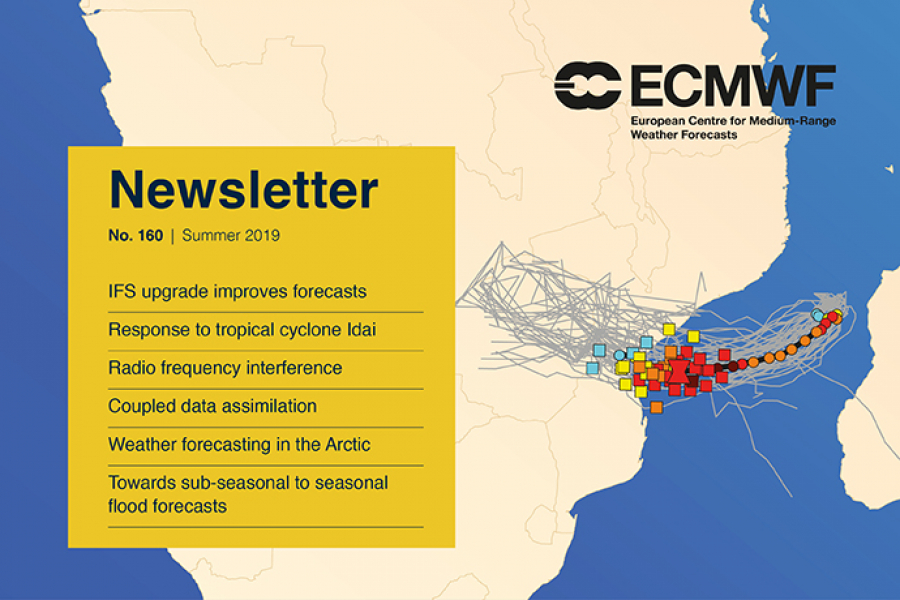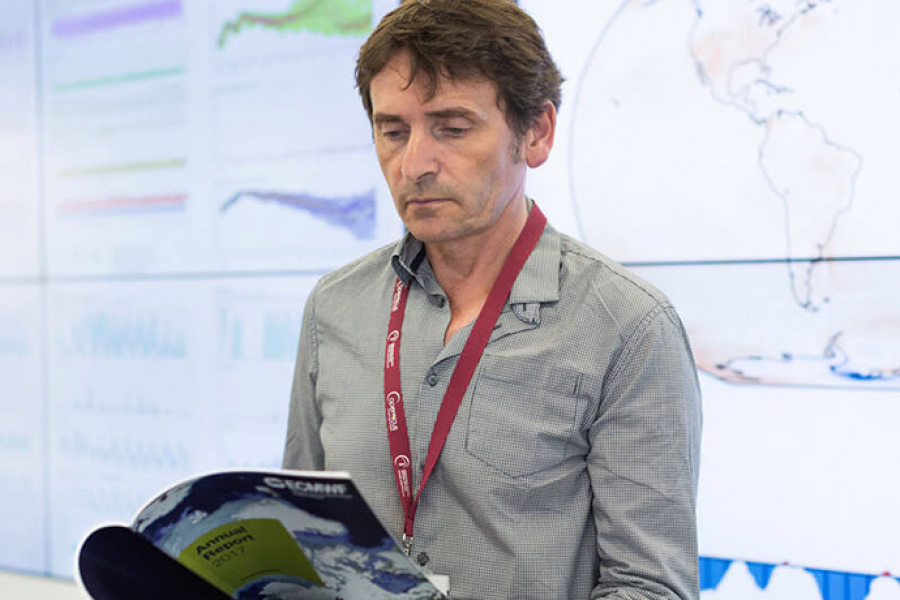
Summer 2019 Newsletter published 19 July 2019 The summer 2019 issue of the ECMWF Newsletter is now available. As well as news about ECMWF staff and events, it features articles about new developments and the use that can be made of ECMWF products.
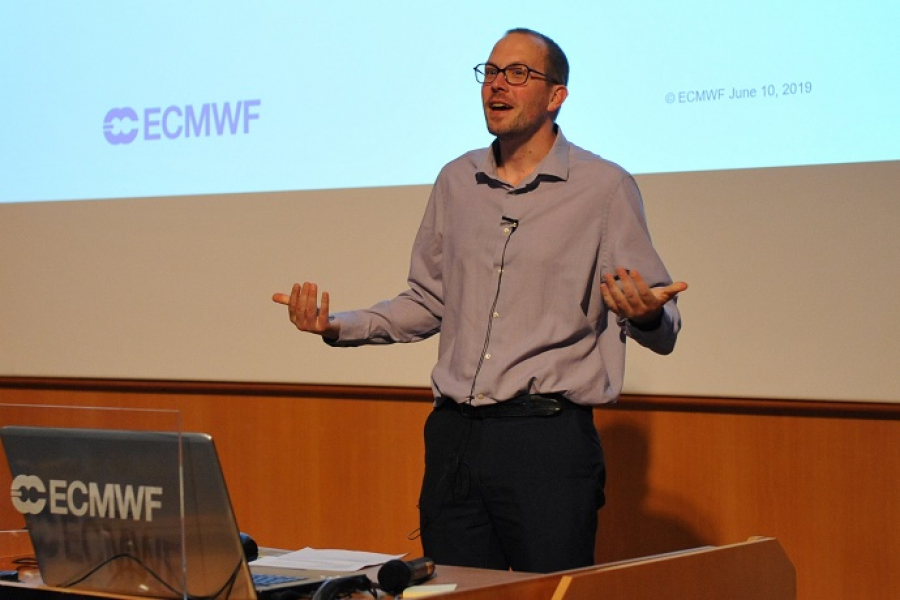
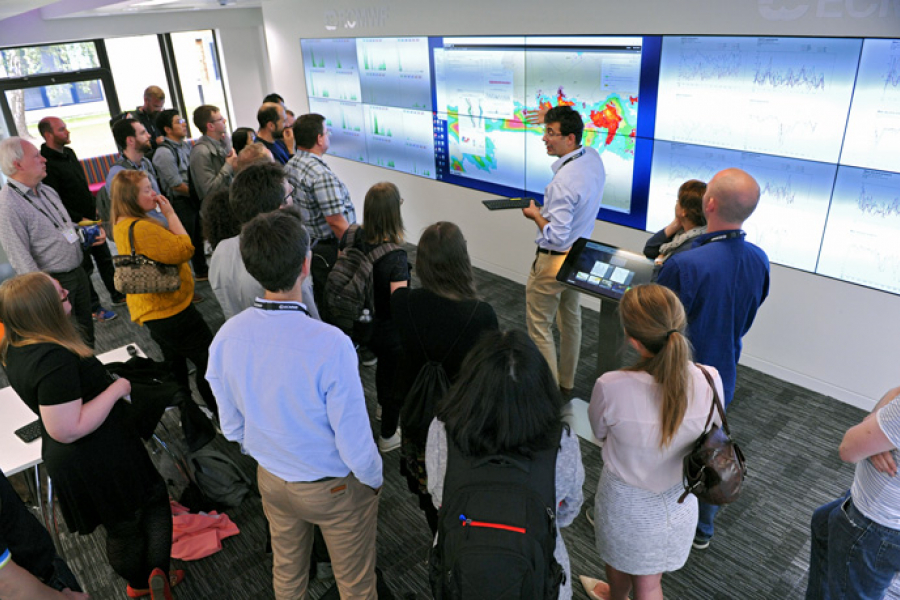
ECMWF user meeting puts emphasis on creativity and interaction 15 July 2019 Creative and interactive sessions took pride of place in this year’s Using ECMWF’s Forecasts meeting, which took place at the Centre from 3 to 6 June. The meetings give ECMWF data users an opportunity to learn about the Centre’s plans, new products and services.
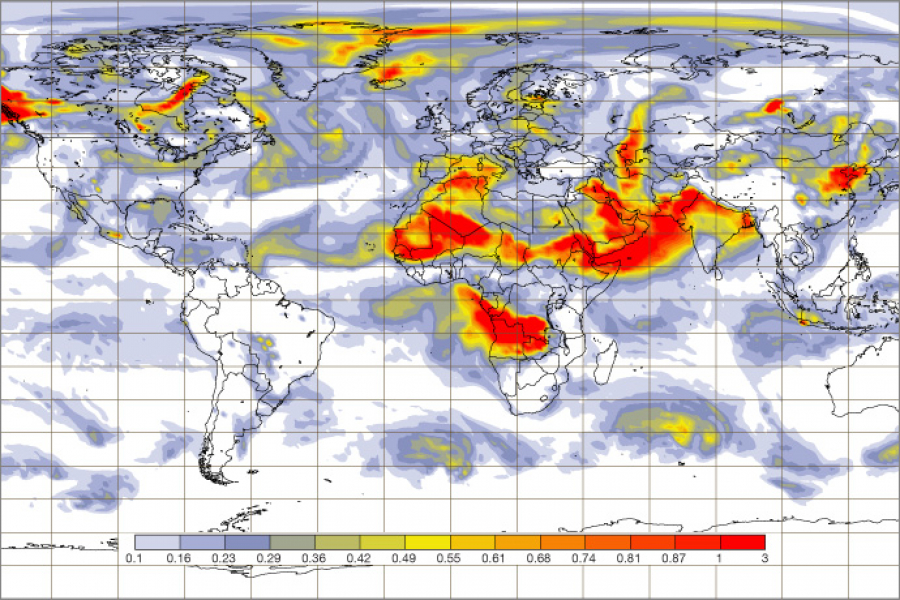
Upgrade improves global air quality forecasts 10 July 2019 The global forecasting system of the Copernicus Atmosphere Monitoring Service (CAMS) was successfully upgraded on 9 July, making air quality forecasts more accurate and robust. CAMS is implemented by ECMWF on behalf of the EU.
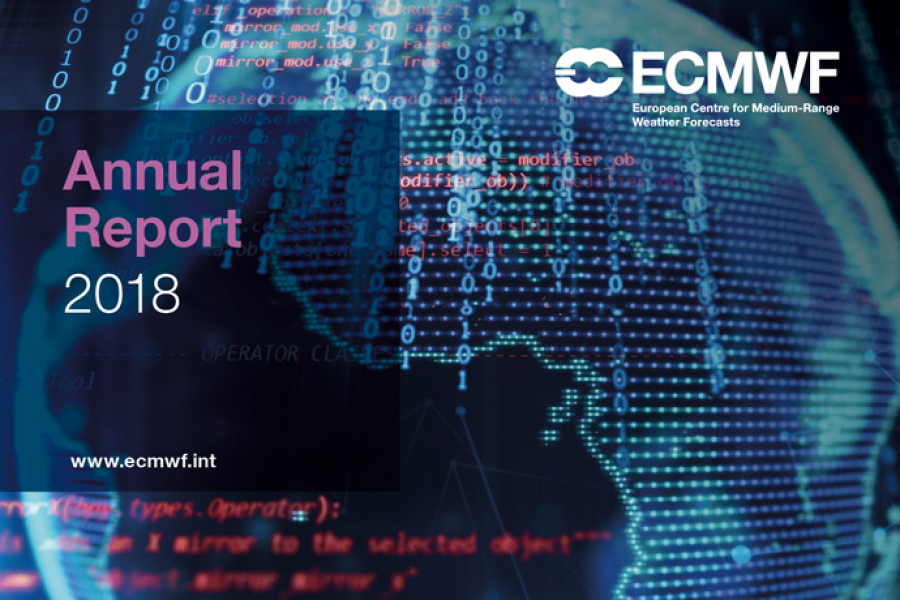
Annual Report 2018 published 8 July 2019 The ECMWF Annual Report 2018 is now available online. The report reviews improvements in forecast performance, advances in research, the Centre’s contributions to Europe’s Copernicus Earth observation programme, and preparations for the new data centre in Italy.
September workshop to review next-generation I/O in supercomputing 1 July 2019 Registration is open for a workshop at ECMWF on 25 and 26 September to review progress in the development of new I/O techniques for supercomputing at the exascale.
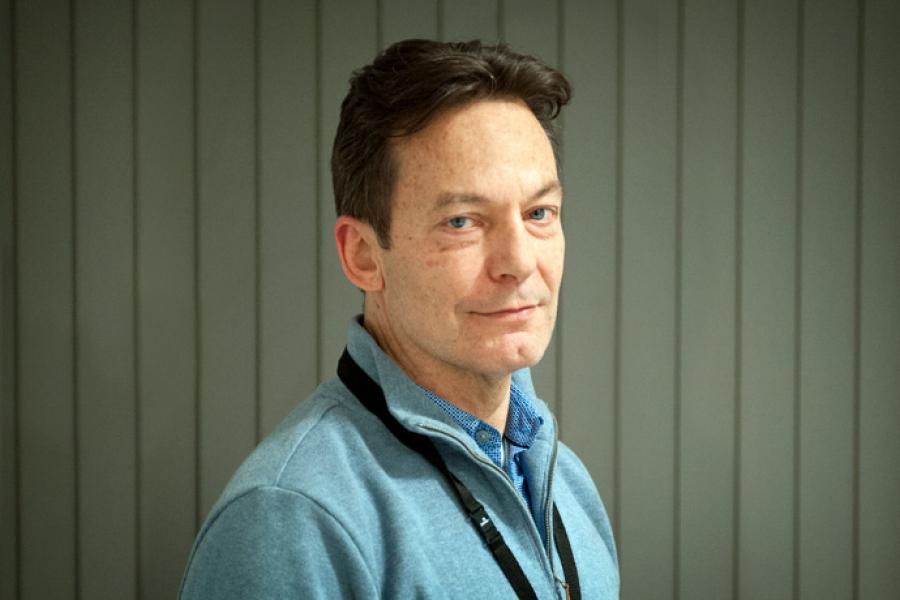
Jean-Noël Thépaut appointed as ECMWF’s new Director of Copernicus Services 27 June 2019 Jean-Noël Thépaut has been appointed as ECMWF’s new Director of Copernicus Services from 1 October 2019, when Juan Garces de Marcilla steps down from the post. Jean-Noël has been a key player in the ECMWF team which has successfully implemented two of the EU’s Copernicus Earth observation services.
Reanalysis pioneer Dick Dee bows out as ERA5 replaces ERA-Interim 24 June 2019 Dick Dee, one of the key figures in the development of global weather and climate reanalysis at ECMWF, is leaving the Centre on 28 June on reaching retirement age, but only after overseeing the transition from the hugely successful ERA-Interim to the state-of-the-art ERA5 reanalysis.
Boost to research as ECMWF provides OpenIFS to Oxford-based volunteer computing project 18 June 2019 OpenIFS at ECMWF has teamed up with the University of Oxford e-Research Centre to enable scientists to run the OpenIFS weather model on thousands of people’s home computers. The OpenIFS@home project was launched on 18 June.
Forecasting system upgrade set to improve global weather forecasts 11 June 2019 ECMWF is implementing a substantial upgrade of its Integrated Forecasting System today, 11 June 2019, which will significantly improve global medium-range weather forecasts. One of the key novelties in IFS Cycle 46r1 is that it makes data assimilation more continuous.
Year of Polar Prediction webinars on 24 and 25 June to focus on next phase 10 June 2019 June 2019 marks the official start of the Year of Polar Prediction’s three-year Consolidation Phase. On 24 and 25 June, three webinars will highlight the achievements of the WMO’s Year of Polar Prediction to date and the challenges that lie ahead.
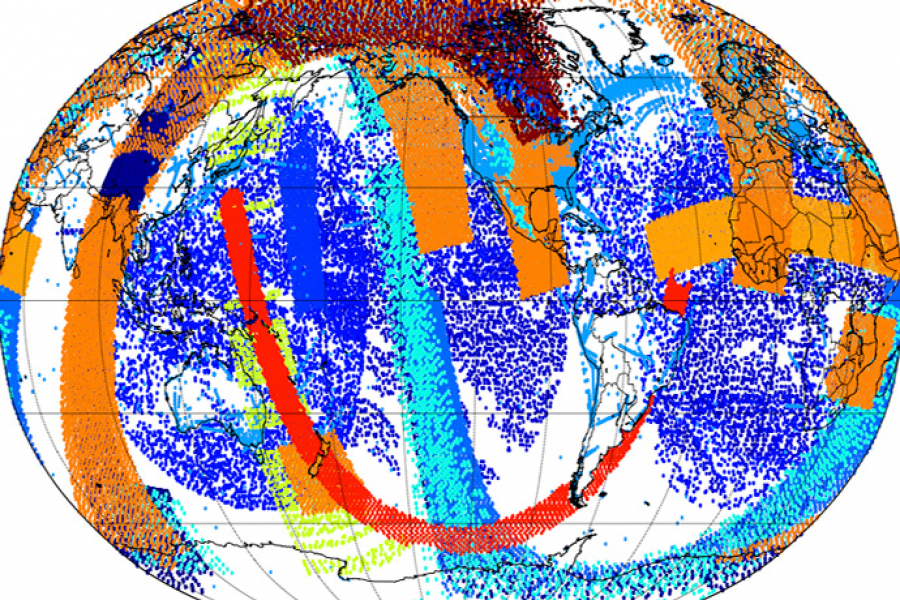
Aeolus data impact tests confirm potential of new wind data for NWP 4 June 2019 A first evaluation of data from the Aeolus satellite launched by the European Space Agency in August 2018 has confirmed that the mission’s ground-breaking laser technology can be used to obtain global wind profiles that are very useful to numerical weather prediction.
EC-Earth hones Earth system model for climate predictions and projections 28 May 2019 More than 50 scientists from the European EC-Earth consortium met at ECMWF from 21 to 23 May to discuss how to develop the Earth system model they use to make climate predictions and projections. The EC-Earth model uses ECMWF’s Integrated Forecasting System for the atmosphere–land component.
How to make Earth science workflows more reproducible 20 May 2019 ECMWF will hold an international workshop from 14 to 16 October 2019 at its headquarters in Reading, UK, to investigate how workflows in Earth sciences can be made more reproducible.
ECMWF holds webinars on June upgrade of its forecasting system 17 May 2019 ECMWF upgrades its forecasting system on a regular basis, and one such upgrade is planned for 11 June 2019. Director of Forecasts Florian Pappenberger explained how the changes will improve forecasts in two webinars on 15 and 16 May 2019.
ECMWF holds webinar on use of radiosonde data in NWP 30 April 2019 ECMWF held a webinar on the use of radiosonde data in numerical weather prediction on 30 April 2019. The webinar covered measurement techniques, the processing of radiosonde data and uncertainties in the data.
ECMWF scientists focus on Earth system at top geosciences meeting 24 April 2019 More than 20 ECMWF scientists set out their latest findings on Earth system processes related to weather, climate and atmospheric composition at the European Geosciences Union General Assembly in Vienna, Austria, from 7 to 12 April 2019.
Spring 2019 Newsletter published 18 April 2019 The spring 2019 issue of the ECMWF Newsletter is now available. As well as news about ECMWF staff and events, it features articles about new developments and the use that can be made of ECMWF products.
Scientists explore use of forecast databases for weather research 15 April 2019 Scientists from across the world flocked to ECMWF from 2 to 5 April 2019 to discuss predictability, dynamics and applications research using ensemble forecast databases for the medium and sub-seasonal to seasonal range. The Centre is currently testing new forecast products for the sub-seasonal range.
European State of the Climate 2018 unveiled in Vienna 9 April 2019 The EU-funded Copernicus Climate Change Service (C3S) implemented by ECMWF presented the European State of the Climate 2018 report at a top geoscience meeting in Vienna on 9 April 2019. Freja Vamborg is the scientist who pulled the report together.