

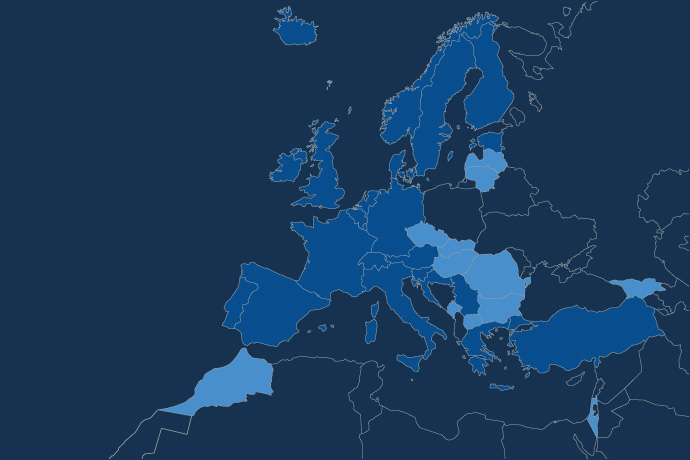
Member and Co-operating States are central to ECMWF’s strategic direction and collaborative model.
Through their collective participation, they provide the resources, expertise, and guidance that shape ECMWF’s priorities and ensure its work is aligned with shared European and international needs. In return, they benefit from access to ECMWF’s world-leading forecasts, computing facilities, scientific expertise, innovations and training, strengthening their own national meteorological capacities.
ECMWF’s Member and Co-operating States receive ECMWF’s prediction data in real time to prepare forecasts for their end users, and they have access to ECMWF's meteorological archive and supercomputers.
In fact, 25% of ECMWF’s high-performance computing (HPC) resources are allocated to its Member States. These resources are used by Member States for research, for time-critical activities supporting their operations, and increasingly for machine learning activities. The graphics processing unit (GPU) component, which was expanded last year, is used extensively.
ECMWF also works with national meteorological and hydrological services (NMHS) and research institutions from many of its Member and Co-operating States to develop its modelling capabilities, design new products, and evaluate and diagnose forecast quality.
These partnerships are supported through initiatives such as the Copernicus National Collaboration Programmes (NCPs), the Machine Learning Project (MLP), Anemoi, and the European Weather Cloud (EWC).
Through the NCPs, ECMWF supports countries in implementing Copernicus data within their national contexts, thereby accelerating data-driven decision-making and ensuring that the benefits of Copernicus reach national policy users.
The MLP aims to develop and integrate ML models into the full operational forecasting system, while Anemoi provides a framework for co-designing ML weather forecasting systems. The European Weather Cloud (EWC), jointly operated by ECMWF and EUMETSAT, provides a community cloud computing platform.
To maintain these productive collaborative working relationships and ensure ECMWF services continue to meet user needs, ECMWF has a long tradition of visiting its Member and Co-operating States.
Florian Pappenberger, ECMWF Director-General, said:
“Our Member and Co-operating States are at the heart of everything ECMWF does. These visits provide a valuable opportunity to learn directly from our partners, understand their evolving needs and challenges, and ensure that our science, forecasts, and services continue to deliver maximum value across Europe and beyond.”
Visits are tailored to each country and provide an important opportunity to exchange, enabling ECMWF to stay up to date with developments at national meteorological services while also sharing the latest updates on ECMWF products and services. Additionally, they offer an opportunity to discuss unique challenges faced by Member and Co-operating States and identify areas where ECMWF can provide further support.
In the first half of 2026, ECMWF visited several of its Member States:
Finland, 26 to 27 February
ECMWF Director-General Florian Pappenberger and Director of the Copernicus Atmosphere Monitoring Service (CAMS) at ECMWF Laurence Rouil visited the Finnish Meteorological Institute (FMI).
The visit began at its Arctic Space Centre in Sodankylä, where they discussed Arctic operations, greenhouse gas research, atmosphere monitoring, and the future perspective of CAMS.
The visit continued in Helsinki, where the ECMWF delegation gave a presentation on ECMWF and CAMS activities to FMI staff and discussed developments in artificial intelligence (AI) and machine learning.
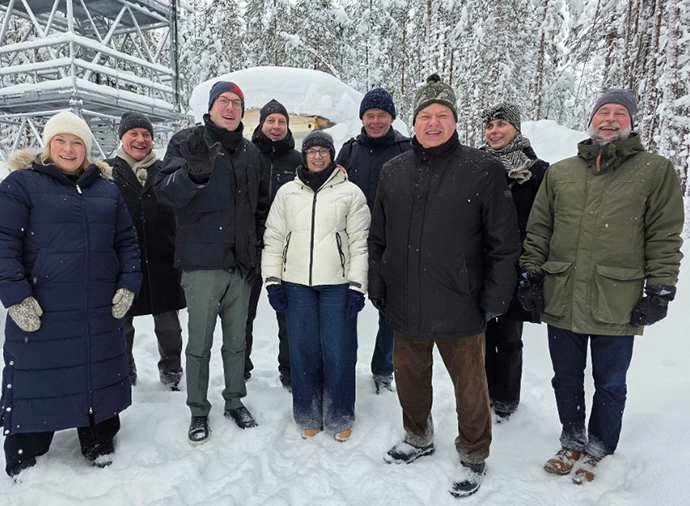
ECMWF's Director-General Florian Pappenberger (third from left) and Director of the Copernicus Atmosphere Monitoring Service (CAMS) at ECMWF Laurence Rouil (middle) visited the Finnish Meteorological Institute (FMI) in February.
Türkiye, 14 to 16 April
The visit began in Istanbul, where ECMWF representatives delivered a presentation to staff and students at Istanbul Technical University (ITU). The presentation highlighted ECMWF’s role within the European meteorological infrastructure, recent developments in open data, and emerging scientific and computing directions.
The delegation then travelled to Ankara to visit the Turkish State Meteorological Service (TSMS), where discussions focused on operational use of ECMWF products, verification activities, and future training opportunities.
They also met with senior officials from the Ministry of Environment, Urbanisation and Climate Change, with whom they discussed Türkiye’s preparations for COP31 and how ECMWF could provide support.
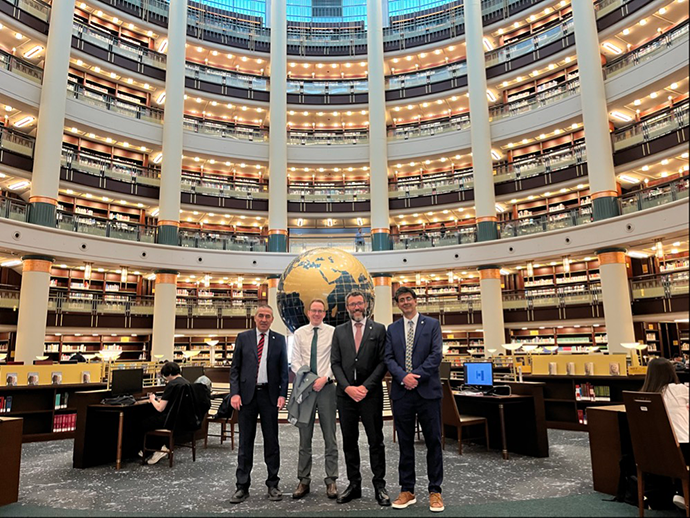
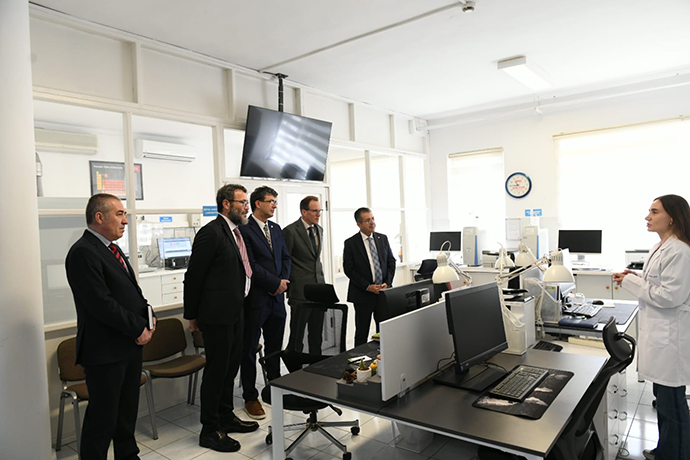
An ECMWF delegation visited Türkiye in April.
Austria, 5 May
In May, ECMWF Director-General Florian Pappenberger visited GeoSphere Austria in Vienna. Discussions with GeoSphere Austria’s leadership covered ECMWF forecasts, AI, the Systematic Observations Financing Facility (SOFF) and the European State of the Climate (ESOTC) 2025 report. Austria’s specific forecasting challenges, such as alpine weather, were also discussed.
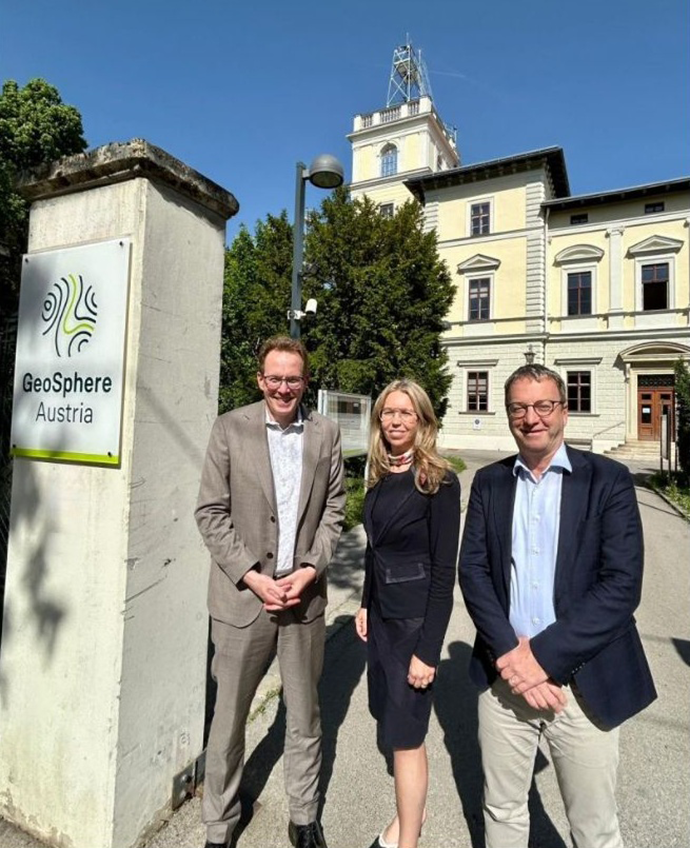
ECMWF Director-General Florian Pappenberger visited GeoSphere Austria in May.
Denmark, 8 May
In May, ECMWF Director-General Florian Pappenberger also visited the Danish Meteorological Institute (DMI) in Copenhagen. The discussions focused on Destination Earth (DestinE), an ambitious initiative of the European Union to create a digital twin of planet Earth, which ECMWF is implementing together with the European Space Agency (ESA) and EUMETSAT.
Croatia, 12 to 13 May
During a visit to the Croatian Meteorological and Hydrological Service (DHMZ) in Zagreb, ECMWF representatives toured the operations centre and delivered presentations on forecasting products and recent developments, including machine learning.
The visit also provided an opportunity to engage with a broader group of stakeholders, including Croatia Control, the University of Zagreb’s Faculty of Geophysics, and the national energy company HEP.
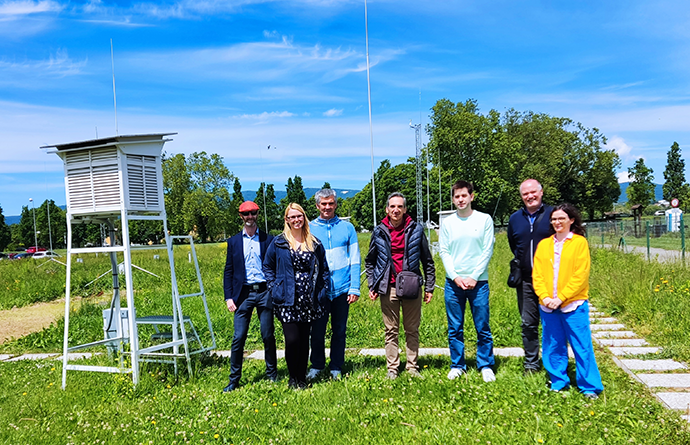
Representatives from ECMWF visited the Croatian Meteorological and Hydrological Service in May.
Portugal, 18 to 19 May
ECMWF representatives visited the Instituto Português do Mar e da Atmosfera (IPMA) in Lisbon, with additional colleagues joining remotely from Reading and Bonn.
The visit included a tour of IPMA facilities and updates on ECMWF activities, with a particular focus on machine learning and key products such as Anemoi, earthkit, and Forecast-In-A-Box.
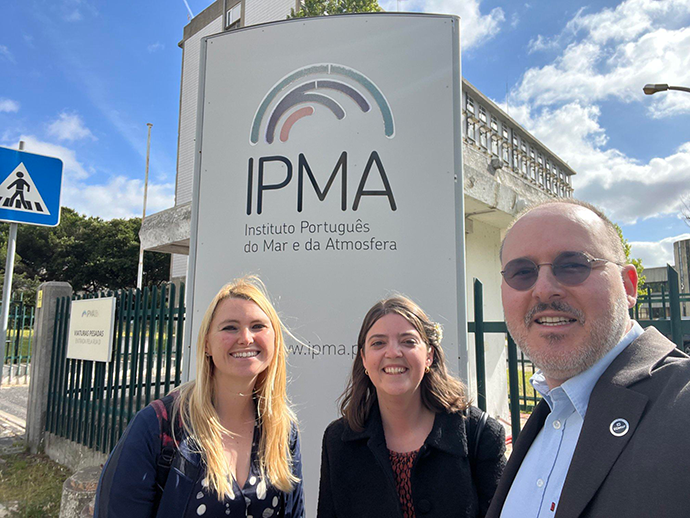
Representatives from ECMWF visited the Instituto Português do Mar e da Atmosfera (IPMA) in Lisbon in May.
Norway, 26 May
During their visit to MET Norway in Oslo, ECMWF representatives discussed the evolution of the Copernicus Atmosphere Monitoring Service (CAMS), the Copernicus Climate Change Service (C3S) and high-performance computing (HPC) at ECMWF.
ECMWF Director-General Florian Pappenberger delivered a town hall presentation to MET Norway staff, highlighting advancements in AI and the Machine Learning Project.
Together with Acting Director of Forecasts Umberto Modigliani, he also met with MET Norway’s Director-General and ECMWF Council President, Roar Skålin. Following the visit, both attended the 36th EUMETNET Assembly, held in Oslo from 27 to 28 May.
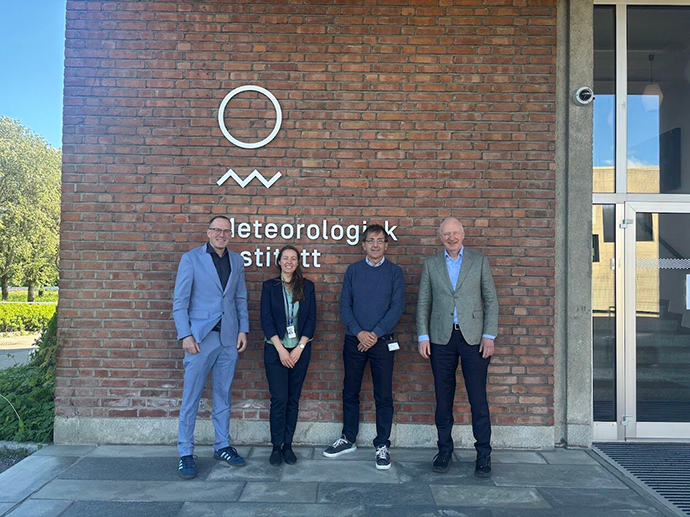
ECMWF Director-General Florian Pappenberger (left) and Acting Director of Forecasts Umberto Modigliani (second from right) visited Norway on 26 May.
Strengthening partnerships
These visits are a cornerstone of ECMWF’s engagement with its Member and Co-operating States, fostering knowledge exchange and strengthening productive working relationships. They provide ECMWF with invaluable feedback, which is essential to advancing both scientific research and product development at ECMWF. Meanwhile, the Member and Co-operating States have the opportunity to learn about new products and receive tailored training.
As the Director-General of the Croatian Meteorological and Hydrological Service (DHMZ), Dr Ivan Guettler, remarked following the ECMWF delegation’s visit in May:
"One of the key tasks of each national hydrometeorological service is to warn of dangerous weather and hydrological phenomena in a timely manner and to monitor climate change. This is our daily responsibility to citizens, the economy, and services that operate in crisis situations. But we cannot fulfill this responsibility alone."
Reliable forecasts and warnings are created through international cooperation, data sharing, and the joint development of models and tools. Weather knows no national borders, so forecasts cannot be developed within the borders of one country or one institution.
That is why the cooperation with the European Centre for Medium-Range Weather Forecasts (ECMWF) is strategically important.”
While each Member and Co-operating State is unique, several common themes emerged across the visits. Many NMHS rely heavily on ECMWF data and products within their operational forecasting workflows, highlighting the importance of timely product delivery and robust data availability. There was also widespread interest in machine learning and its potential applications, with many organisations keen to learn more and share experiences.
ECMWF staff provided hands-on support during visits, helping Member and Co-operating State colleagues resolve technical issues and make better use of ECMWF services.
Besides the aforementioned visits, many ECMWF staff members also visit Member and Co-operating States ad hoc throughout the year to discuss various topics, such as progress on a joint project.
Several visits are planned for the second half of 2026, including to Bulgaria, Greece, Hungary, Ireland, Romania, Slovakia, Spain and Sweden.
Further reading
Member States are the driving force behind ECMWF’s journey since its foundation over 50 years ago. ECMWF's annual budget is funded primarily by annual contributions from its Member and Co-operating States. ECMWF Member States are represented on the ECMWF Council, the organisation’s governing body, and help shape ECMWF’s strategic direction and activities.
To find out more about ECMWF’s 23 Member States and 12 Co-operating States, visit the ECMWF Member States page.
High-performance computing (HPC) is key to ECMWF’s machine learning activities and supports Member States in continuously advancing their forecasting capabilities. ECMWF’s high-performance computing facility (HPCF) is installed in ECMWF’s data centre in Bologna, Italy, where it took over the production of operational forecasts in October 2022. It is one of the largest of its kind in Europe.
For more about the high-performance computing facility at the core of ECMWF’s operational and research activities, visit the ECMWF Supercomputer facility page.
ECMWF implements the Copernicus Atmosphere Monitoring Service (CAMS) and the Copernicus Climate Change Service (C3S) on behalf of the European Union. Both services have a National Collaboration Programme (NCP).
Launched in 2021, the CAMS National Collaboration Programme (CAMS NCP) is an ECMWF initiative, endorsed by the European Commission, designed to assist the 31 EU Member States and Copernicus-participating countries (Norway, Iceland, the UK and Ukraine) in leveraging this Copernicus service to enhance their national capacities.
To learn more about the CAMS NCP, visit the CAMS National Collaboration Programme webpage.
The National Collaboration Programme of the Copernicus Climate Change Service (C3S NCP) is designed to strengthen the use of C3S data products and services across EU Member States and Copernicus participating countries (C3S countries). Initiated by ECMWF and endorsed by the European Commission, the programme underscores the importance of close collaboration with national stakeholders to ensure the relevance and long-term impact of C3S.
To learn more about the C3S NCP, visit the C3S National Collaboration Programme website.