

Users of ECMWF data are addressing some of the most pressing challenges in the meteorological and climatological communities.
From improving early warning systems to strengthening the resilience of energy infrastructure, ECMWF products underpin innovation and deliver real-world impact.
Here we present three recent examples that illustrate how ECMWF products are being used in practice and how access to consistent, high-quality datasets delivers impact.
Managing renewable energy risk
At CentraleSupélec, researchers developed an innovative approach to managing financial risk for solar energy producers facing increasingly unpredictable weather. Their method combined a weather-based insurance model with a peer-to-peer risk-sharing system, which demonstrated that solar farms can dramatically reduce financial uncertainty – cutting risk variability by more than half.
The work relied on access to ECMWF products – specifically irradiance and temperature forecasts from the ECMWF operational archive – which was fundamental in resolving the lack of publicly produced data, allowing researchers to compute forecast errors and translate them into monetary values. The datasets provided a high temporal resolution, enabling a realistic simulation of a solar farm producer’s operational workflow. The researchers modelled decision making at 12 p.m. daily, synchronised with electricity spot market timings, to recompute actual electricity production.
Without access to ECMWF data, such empirical validation would have been impossible, leaving the research paper without the necessary practical grounding to demonstrate the algorithm’s utility.
A contrastive learning model for predicting tropical cyclone rapid intensification
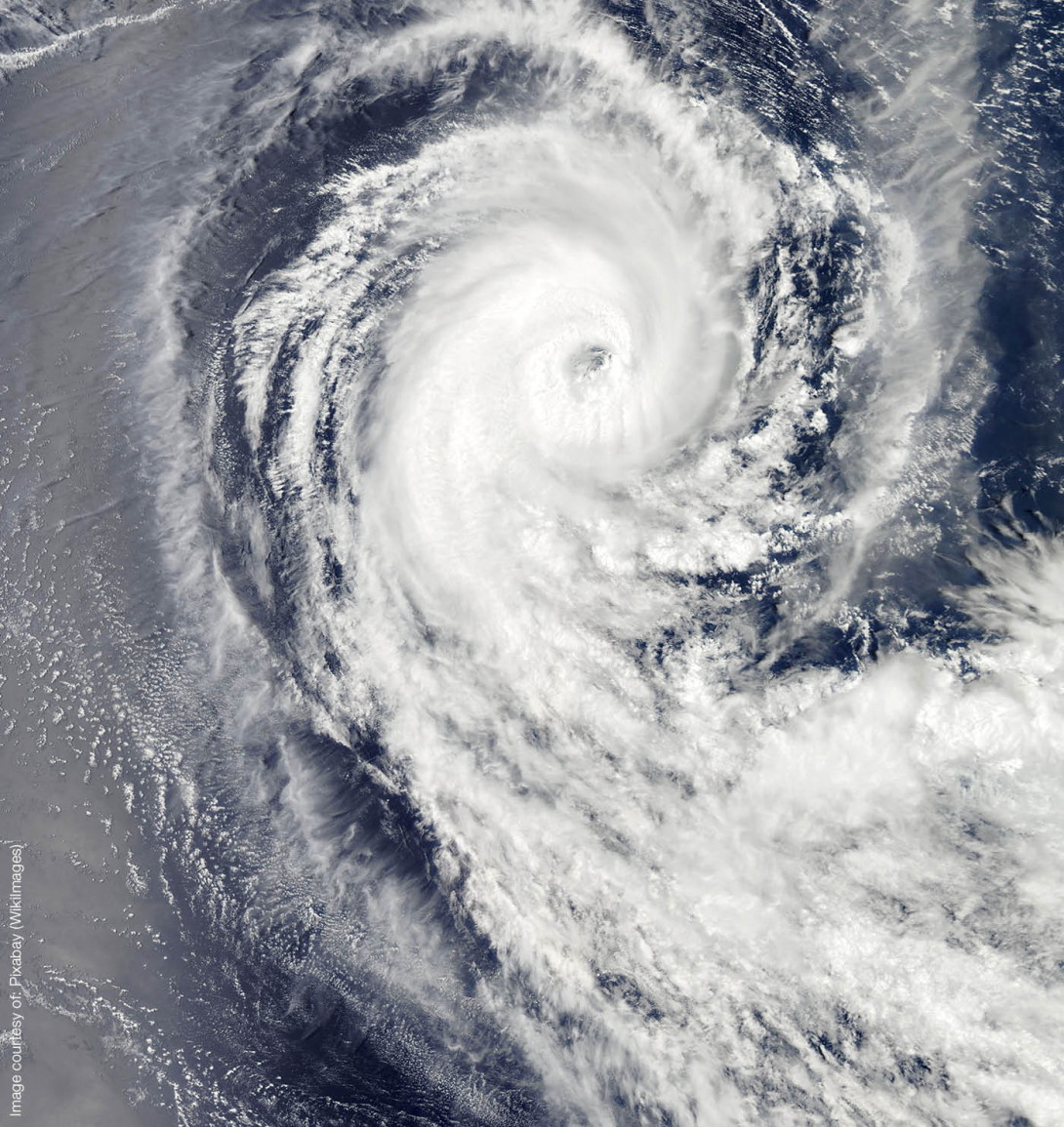
Researchers at the Institute of Oceanography, Chinese Academy of Sciences, developed a novel contrastive learning model that significantly improves the forecasting of tropical cyclone rapid intensification utilising ECMWF forecast and analysis data. The ability to predict rapid intensification – when a tropical cyclone strengthens dramatically over a short period more accurately – has critical implications for emergency management and coastal community preparedness, potentially saving lives and reducing economic losses.
By training advanced machine learning algorithms with ECMWF datasets, the team was able to better capture the complex atmospheric conditions leading to sudden storm strengthening.
Such research was made successful through ECMWF datasets being broadly consistent both spatially and temporally, as well as the breadth of variables. This enabled the efficient alignment of environmental fields with tropical cyclone samples, reducing the additional effort required in relation to missing data or differences in formatting, providing well-aligned input features and improving comparability across samples.
In this work, ERA5 reanalysis data, produced by the Copernicus Climate Change Service (C3S) at ECMWF, provided comprehensive three-dimensional representations of atmospheric structure, critical for understanding vertical dynamics driving rapid intensification.
Whilst ERA5 reanalysis fields were used for model training, and as part of the environmental inputs, in the operational setting, ERA5 was replaced with forecast fields from the Integrated Forecasting System (IFS). The IFS offers higher spatial resolutions and stronger representation of wind-field intensity, leading to an added improvement in the forecasting of rapid intensification performance. This combination of reanalysis and forecast data reflects the growing role of ECMWF products as both training data and real-time inputs for data-driven applications.
Without ECMWF data, the work would have required substantial harmonisation of variables, spatial grids, and time axes, as well as the reengineering of the entire data processing and model training pipeline. This would likely have led to reduced sample availability, loss of consistency across datasets, and lower model performance and reproducibility. In short, ECMWF data were not just helpful, they were instrumental to the success and reliability of the research.
Understanding wildfire impacts on the stratosphere
Researchers at the U.S. Naval Research Laboratory used ECMWF’s operational archive alongside ERA5 to investigate how wildfire smoke influences the stratosphere (https://doi.org/10.1029/2023JD040289). Their work focused on two major Australian wildfire events in 2009 and 2019–2020, which generated intense pyrocumulonimbus clouds capable of forming anticyclonic circulation known as Smoke With Induced Rotation and Lofting (SWIRLs).
Access to ECMWF’s operational archive proved invaluable to the team’s work. It enabled the analysis of forecasts without aerosol heating, allowing them to test whether the SWIRLs could be sustained in the absence of smoke-driven radiative effects.
The results showed that ECMWF’s operational model could not maintain the observed SWIRLs when aerosol heating was removed. This finding provided clear evidence that accurately representing aerosol heating in forecast model physics is essential for capturing smoke-induced stratospheric circulations.
The ability to download historical forecast data, without needing to run high-cost forecast models, made this analysis possible and helped accelerate the research.
This study underscores how ECMWF’s high-quality, readily accessible data enables cutting-edge atmospheric research, directly supporting new insights into extreme wildfire impacts and advancing our understanding of how smoke influences the upper atmosphere.
Supporting global users
These examples, drawn from Research Service Agreements for access to the Archive Catalogue and from across multiple sectors, demonstrate how ECMWF products support a wide and evolving range of user needs.
As the demand for highquality data grows, ECMWF remains committed to providing reliable datasets, expertise, tools and support that help users turn complex challenges into measurable impact.
Access ECMWF data
Explore available datasets and access options via the ECMWF data portal: https://www.ecmwf.int/en/forecasts/datasets
Did you know? ECMWF Fee Waiver Scheme
If you are a research institution, humanitarian agency, NGO, or organisation working for societal benefit, you may be eligible to have ECMWF service charges waived. Waivers are subject to management approval and permitted only for Official Duty or Research Purposes. To find out more about this: ecmwf.int/en/forecasts/accessing-forecasts/service-agreements.