

ClimAfrica 2025 brought together governments, public institutions, scientists, innovators, and development partners to explore how technology and data can strengthen early warning systems and climate resilience across the continent.
Held in Rabat, Morocco, and co-organised and hosted by the General Directorate of Meteorology of Morocco, the two-day forum was designed to deliver solutions, scalable innovations, strategic partnerships and tangible political commitments to tackle the pressing climate risks intensifying across Africa.
For the first time, ClimAfrica featured an Innovation Challenge under the theme “From Ideas to Impact: Tech & Data Innovation for Climate Resilience and Early Warning in Africa”. The challenge invited applicants from across Africa to present technological, digital, organisational, or data-driven solutions that help anticipate climate risks, inform decision-making, and protect lives in sectors including agriculture, water, health, energy, and urban infrastructure.
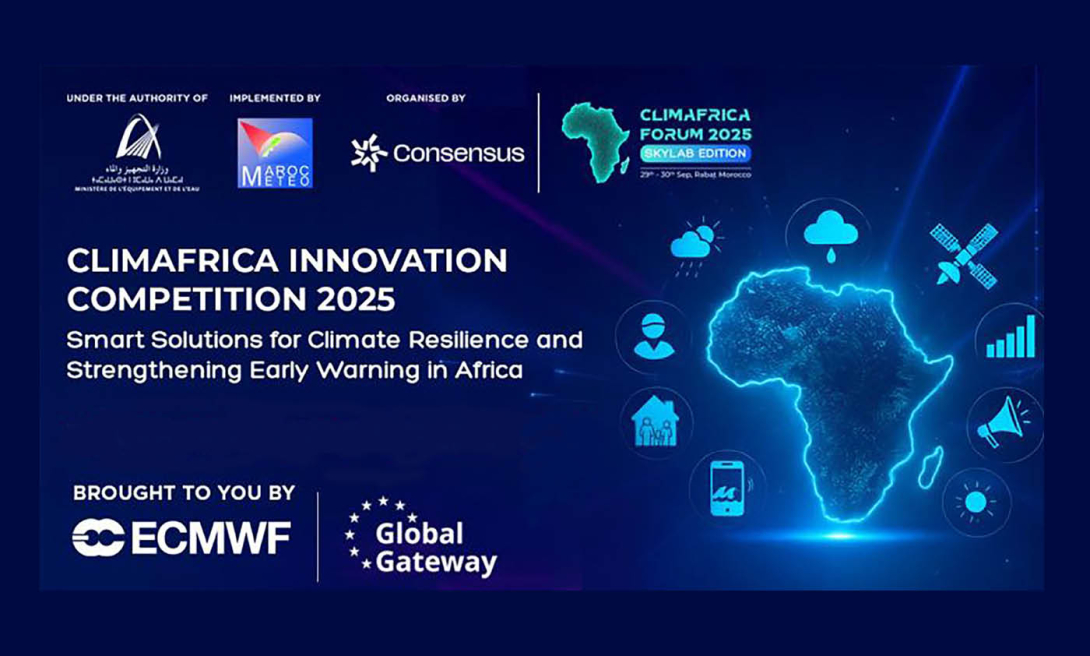
The competition reflects ClimAfrica’s broader mission: to empower local innovation, elevate youth voices, and connect promising ideas with the institutions and resources needed to scale their impact. ECMWF, as an Innovation Partner through the Strengthening Early Warning in Africa (SEWA) programme, sponsored the challenge, highlighting the Centre’s commitment to supporting early warning capacities and fostering Africa–Europe collaboration in climate science.
By framing the challenge around SEWA, the ClimAfrica Innovation Challenge linked innovation with the practical ambition of improving actionable early warning systems across the continent. The competition encouraged solutions that are locally adapted, scalable, and capable of integrating observations, forecasts, and climate data into decision-relevant insights. At the same time, it promoted opportunities for African innovators to interact with international experts and institutions, building networks that extend beyond the forum itself.
This first edition of the Innovation Challenge received 22 submissions across five prize categories:
- Weather and climate-induced early warning services and tools;
- Demonstration of the use of ECMWF NWP, Copernicus and/or Destination Earth (DestinE) data;
- Developments on impact-based forecast services and tools;
- Applications on the use of Cloud services, AI/ML and other digital infrastructure in scope of early warning;
- Enhancement of partnerships between African and European communities on the application of NWP data for early warning activities.
The winning projects were selected by a panel of representatives from ECMWF, the Joint Research Centre (JRC), Meteo Maroc, the Institut de Recherche pour le Développement (IRD) and the International Water Research Institute (IWRI). Each project showcased how smart, data-driven approaches can address urgent challenges and highlighted not only technical ingenuity but also a deep understanding of the societal and environmental context in which early warning systems operate.
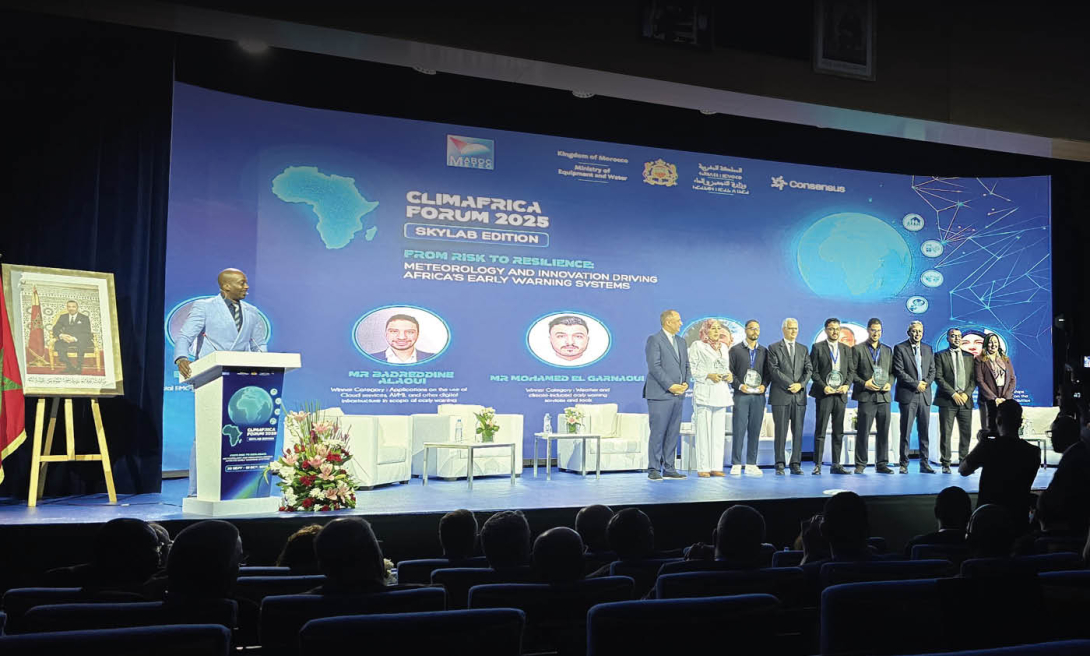
ClimAfrica 2025 winning projects
- Ground sensing – Mohamed El Garnaoui from Sultan Moulay Slimane University, Morocco.
Uses a network of affordable sensors to provide real-time groundwater monitoring, helping communities anticipate water stress and protect agricultural livelihoods. - Area of interest (AOI)-based Saharan dust alerts – Mohamed Smouni from Sultan Moulay Slimane University, Morocco.
Delivers personalised early warnings via mobile platforms for Saharan dust events, supporting health, agriculture, and transport decision-making. - Remote sensing for drought resilience – Emmanuel Hanyabui from University of Cape Coast, Ghana.
Combines remote sensing and climate data to guide smallholder pineapple farmers in Ghana, providing actionable advice to manage drought risks and protect crops and livelihoods. - Low-cost analog ensemble forecasting – Badreddine Alaoui from Direction Générale de la Météorologie, Morocco.
Applies machine learning (ML)-enhanced analog ensemble forecasting to improve low-visibility and surface weather forecasting at Moroccan airports, offering affordable probabilistic guidance. - Leveraging the Global Drought Observatory – Sara Moutia from Direction Générale de la Météorologie, Morocco.
Integrates Moroccan and regional drought data into European monitoring platforms, creating actionable, borderless early warning information.
Strengthening Early Warning in Africa (SEWA)
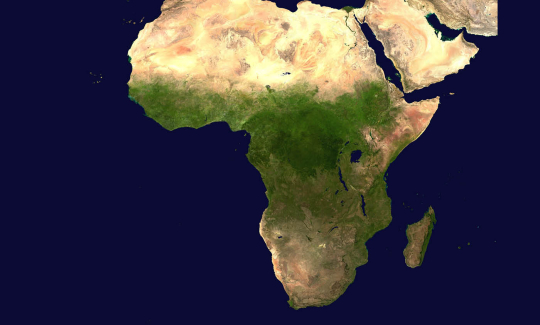
Jointly implemented by the African Union Commission, ECMWF and EUMETSAT as part of the Africa – EU Space Partnership Programme, SEWA aims to develop space-based services and applications to strengthen early warning systems for hazardous weather and climate-related events in sub-Saharan Africa. ECMWF is leading one of the five SEWA activities, which is to enable the co-design and delivery of impact-based forecast services and tools in collaboration with other European stakeholders.
More details of the initiative can be found online: https://www.ecmwf.int/en/about/what-we-do/environmental-services-and-future-vision/strengthening-early-warning-africa