

More than 220 participants from across the global forecasting community joined ECMWF in Reading and online from 1 to 4 June for UEF2026, the annual ‘Using ECMWF's Forecasts’ event. The event brought together forecast users, researchers and operational meteorologists to exchange experiences, discuss challenges and help shape the future development of ECMWF products and services.
This year's theme, Extreme Temperature Forecasts, was particularly timely and well received by attendees. As heatwaves and cold waves continue to affect communities worldwide, the programme explored how advances in numerical weather prediction (NWP), machine learning and artificial intelligence (AI), seasonal forecasting, impact-based forecasting, and the visualisation of extremes are improving the prediction of temperature extremes and supporting decision-making.
The event received very positive feedback. Overall, 91% of participants agreed that UEF2026 met its objective of enabling participants to learn about and provide feedback on ECMWF forecast products and services, while 98% said they would recommend the event to colleagues. Participants particularly valued the opportunity to stay informed about the latest ECMWF developments, expand their knowledge and skills, learn from real-world user experiences, and strengthen connections with both ECMWF experts and the wider forecasting community.
The event opened with updates from ECMWF on Integrated Forecasting System (IFS) model cycles, research, machine learning and forecasts and services, followed by an interactive panel discussion in which participants explored upcoming challenges, the role of machine learning, and extreme events.
The programme combined strategy updates from ECMWF with practical user case studies, giving participants both a view of upcoming scientific and technical developments and a forum to discuss how these developments affect operational forecasting.
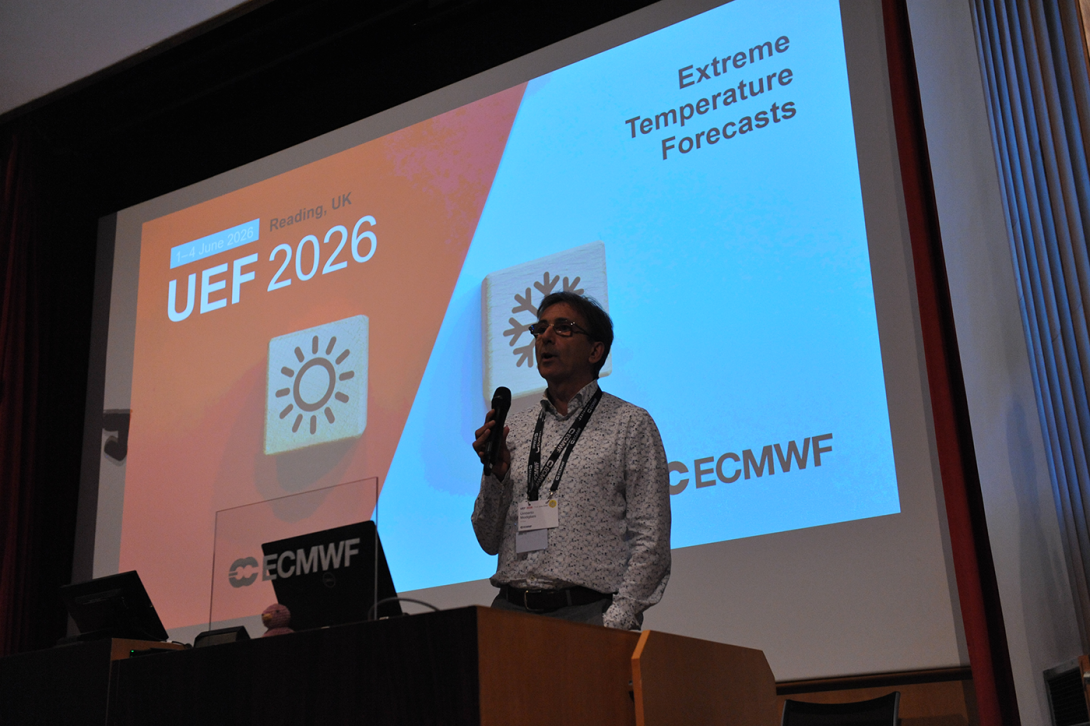
On the temperature theme, Annelize van Niekerk (ECMWF) explained how temperature is represented in ECMWF’s IFS. While this topic may appear straightforward at first glance, the presentation highlighted the many interacting processes, from local to global scales, that influence forecast temperature.
Case studies demonstrated the wide range of challenges associated with forecasting extreme temperatures. Kristín Hermannsdóttir (Icelandic Met Office) presented Iceland’s unprecedented May 2025 heatwave, while Dan Suri (Met Office, UK) provided an operational forecaster’s perspective on the UK’s May 2026 heatwave. Antonio Fuentes Moreno (Swedish Meteorological and Hydrological Institute (SMHI)) showed forecast biases during January and February 2026 cold events.
The application of AI models was explored, with Aleksandar Zecevic (Institute of Hydrometeorology and Seismology (IHMS) of Montenegro) comparing AI models with ECMWF's IFS over Montenegro's complex terrain, and Fuki Kudo and Jumpei Fujino (Weathernews Inc., Japan) demonstrating an AI downscaling model using Japan's record-breaking summer of 2025.
The breadth of applications was further demonstrated by Amélie Loubet (Mercator Ocean International), who explained the monitoring, forecasting and communication of marine heatwaves. Ibrahim Hadyeh delivered the Jordan Meteorological Department’s first-ever UEF contribution, presenting work on anomaly detection skill and temperature bias correction in aviation forecasting. From the energy sector perspective, Isla Finney (Lake Street Consulting Ltd) compared AI- and NWP-based forecasts over the winter of 2025/2026.
The keynote presentation was given by Madeleine Thomson (Wellcome), who provided insights into her career and her work on seasonal climate forecasting to support disease early warning systems. She highlighted how her work has supported initiatives such as the National Guidelines for Malaria Surveillance and Response in Tanzania before introducing Wellcome’s Climate Services for Health priority.
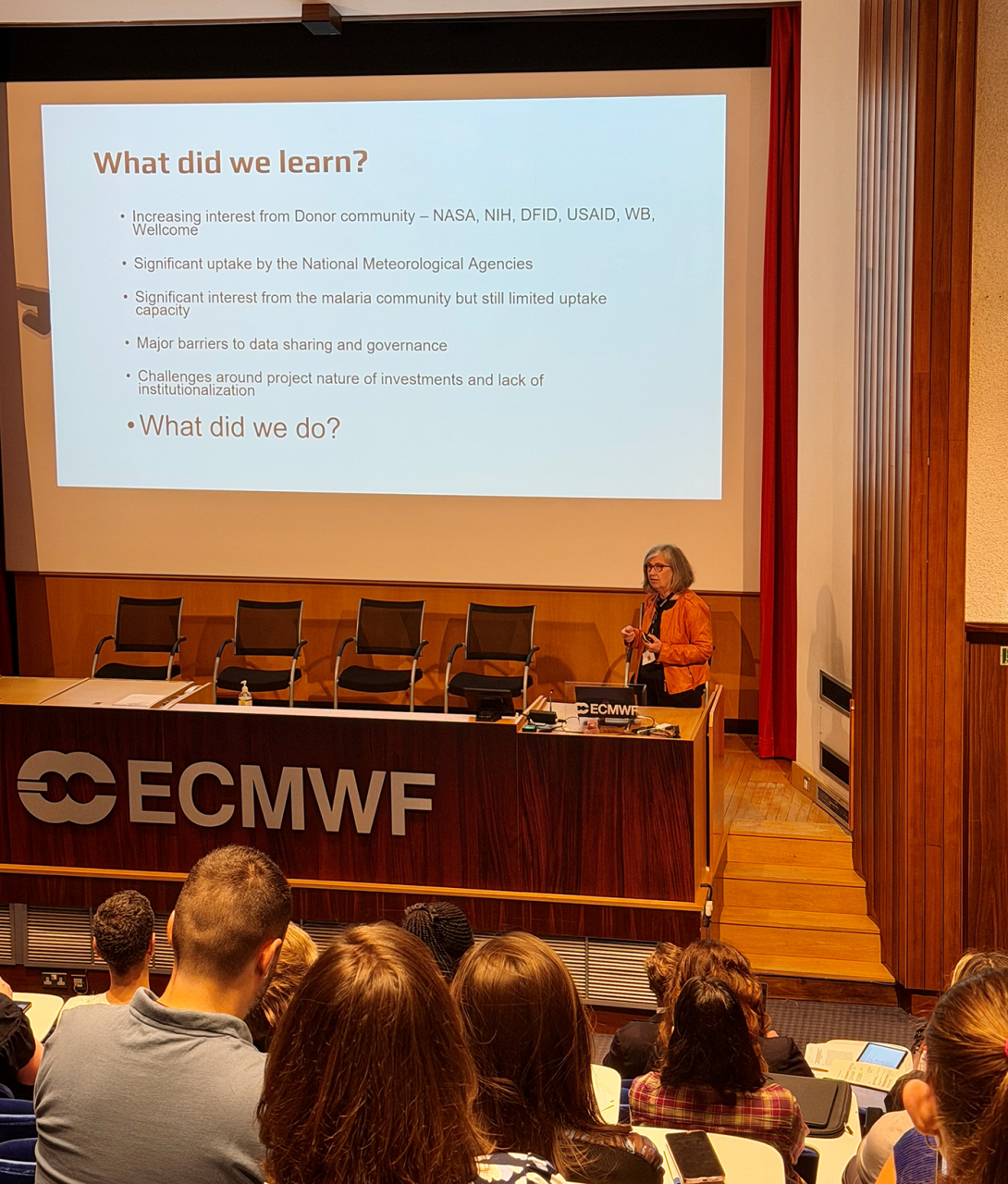
A session on forecast-to-impact focused on health, with Ana Oliveira (CoLAB +ATLANTIC) showcasing AIR4health and its approach along with case studies. Ousmane Ndiaye (African Center of Meteorological Applications for Development (ACMAD)) presented heatwave early warning bulletins and the related health advice used in Senegal.
Claudia Di Napoli and Rebecca Emerton (both ECMWF) demonstrated how ECMWF's thermal comfort products and Thermal Trace application can support human-centric and health-related weather forecasting. These and other ECMWF and Copernicus Climate Change Service (C3S) web applications, including Weather Replay, Extremes ERA and Prismera, were showcased through live demonstrations, encouraging attendees to further explore extreme-event data.
Visualisation of extreme temperature data was also explored, with Kristian Nielsen (The World Energy & Meteorology Council (WEMC)) showcasing the WEFEX tool for forecasting extreme weather in Europe to support decision-making for the energy sector. Stephanie Rees (Google) described how different layers in Google Earth can help improve understanding of heat resilience.
Dedicated sessions on GRIB2 and SEAS6 gave attendees an opportunity to learn more about the upcoming migration to the new data format and gain an early look at the next generation of ECMWF's seasonal forecasting system. Both sessions generated lively discussion and strong interest in operational implementation.
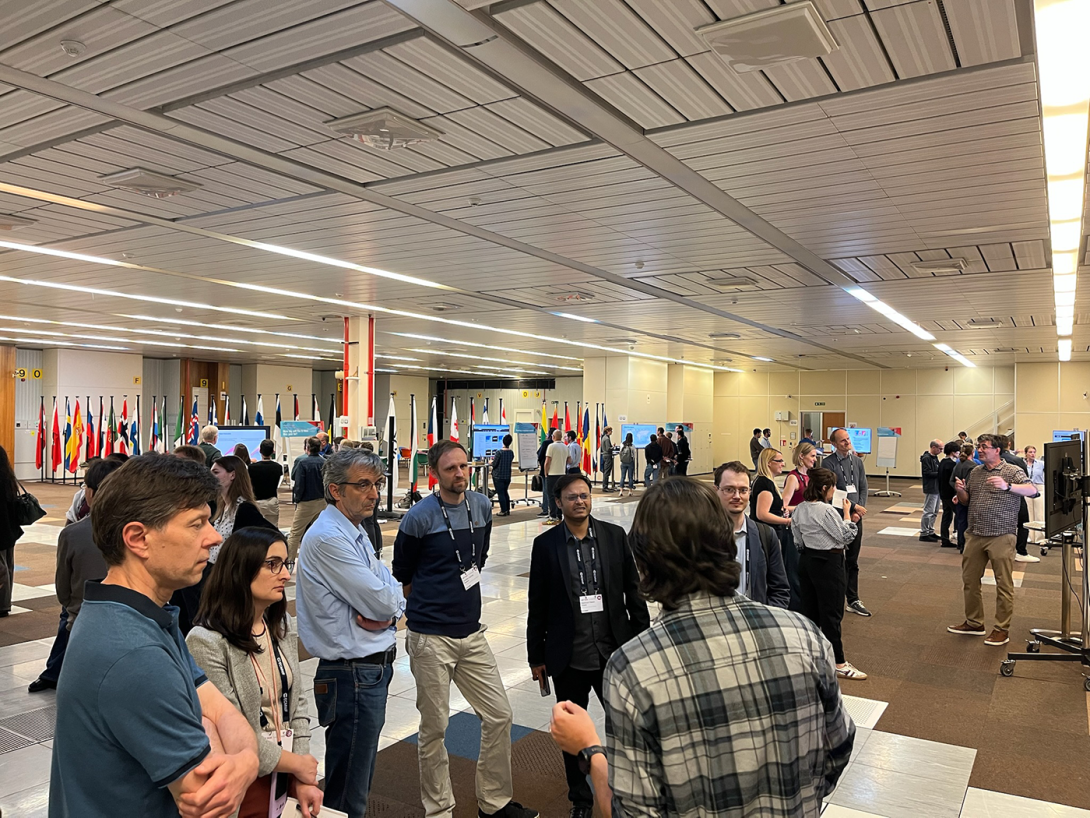
Networking remained a central part of UEF and continues to be recognised as one of the event’s strengths. Alongside numerous opportunities for informal discussions throughout the week, a networking game encouraged participants to meet colleagues from different organisations, countries and disciplines.
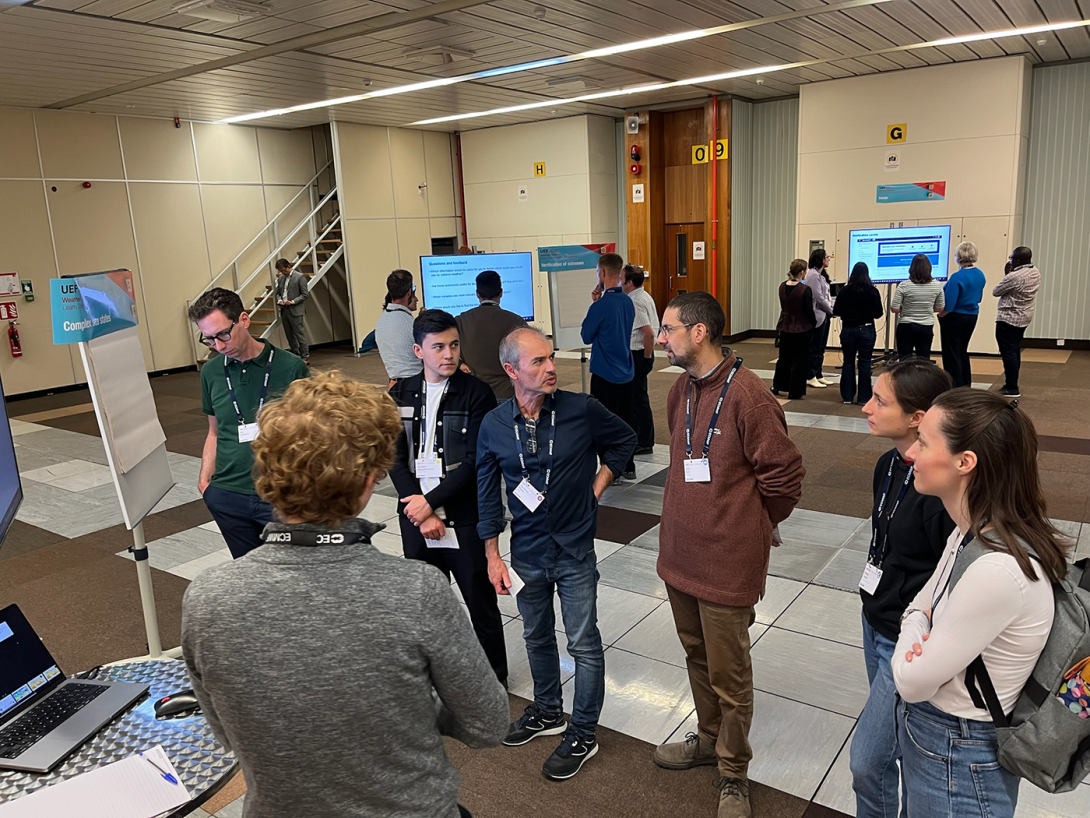
The UEF2026 interactive activities were particularly successful in encouraging conversations. Weather Stations, held in the old computer hall, rotated attendees between ten themed stations led by ECMWF experts, creating valuable opportunities for informal discussion, knowledge exchange and feedback. The User Voice Corner, a regular UEF feature, gave attendees the opportunity to speak directly with ECMWF experts and share their views on products, services and future priorities.
UEF2026 once again demonstrated the value of sustained dialogue between ECMWF and its users. The discussions, feedback and ideas gathered during the event will help guide future developments in ECMWF products and services, ensuring they remain scientifically robust, operationally relevant and responsive to the evolving needs of the forecasting community.
UEF2026 also thanked two long-standing ECMWF staff members, Tim Hewson and Thomas Haiden, who are retiring, for their support and contributions to UEF and its predecessor events over many years.
Recordings and presentation slides from UEF2026 are available on the UEF2026 web page.