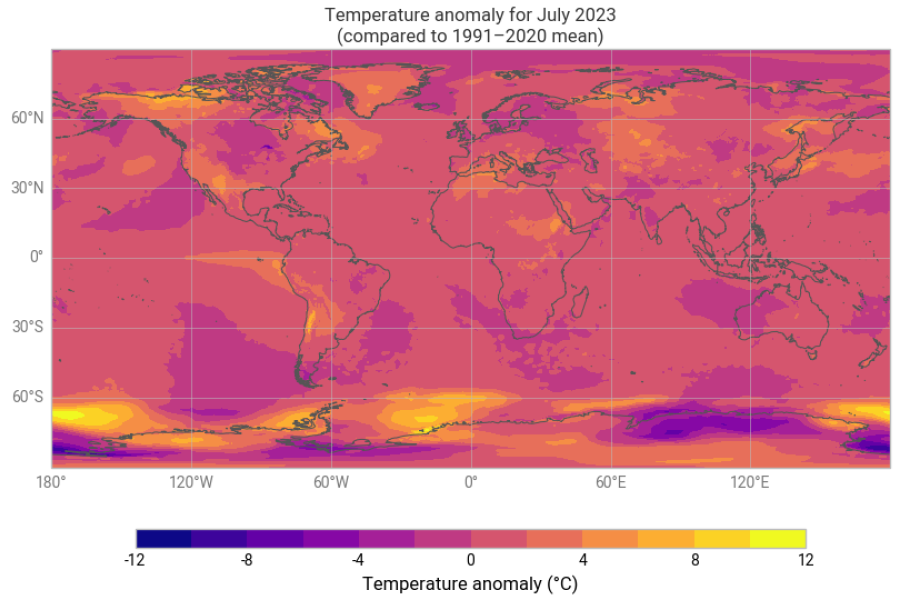
View trends in air and sea surface temperatures in ERA5 data from the C3S Climate Data Store. Calculate and plot anomalies.
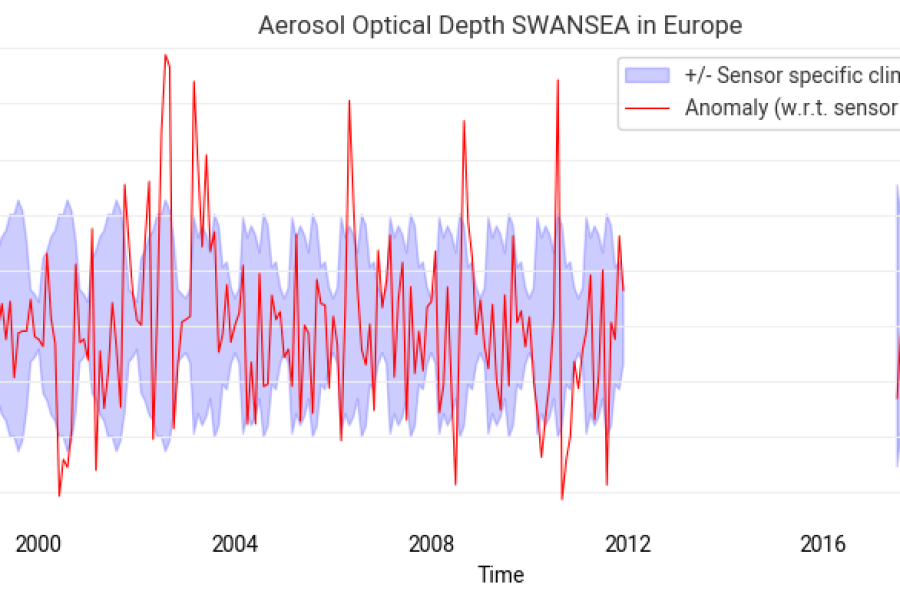
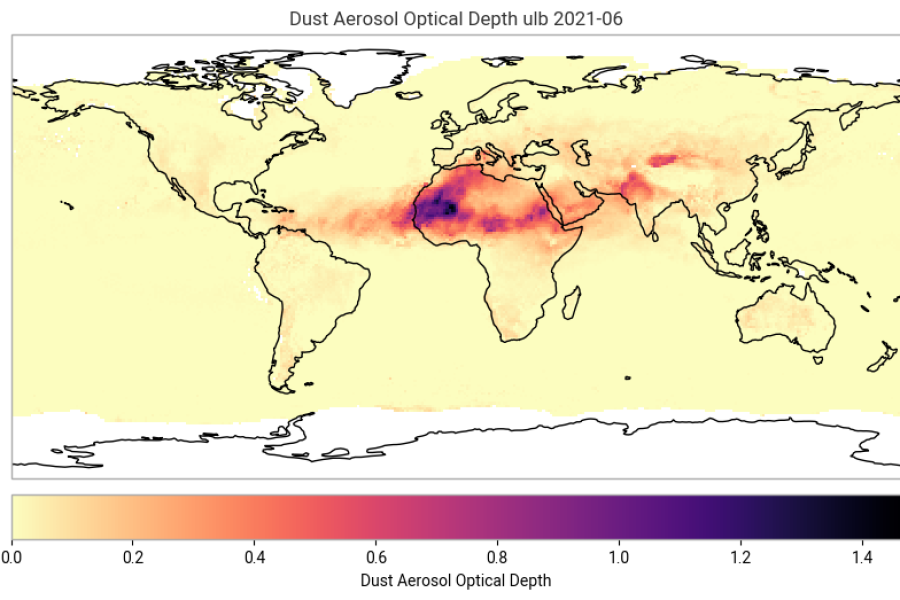
Introduction to the C3S Aerosol properties gridded data derived from satellite. Creation of a full Climate Data Record.
Introduction to the C3S Aerosol properties gridded data derived from satellite. Use cases for monthly mean single sensor data.
Access and use of satellite-derived Greenhouse Gas (GHG) atmospheric carbon dioxide (CO2) Level 2 data product.
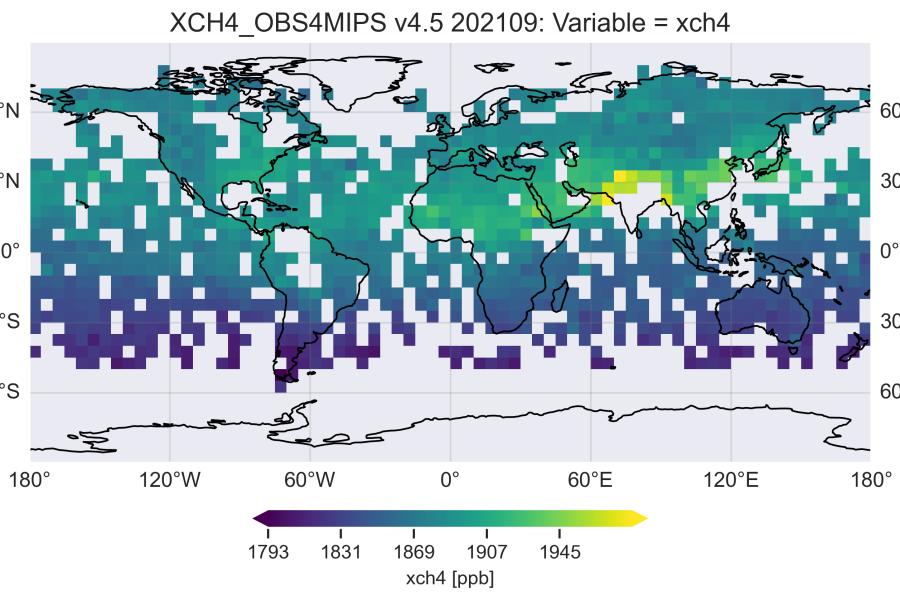
How to access, read and use Greenhouse Gas atmospheric carbon dioxide and methane data: temporal and spatial variation
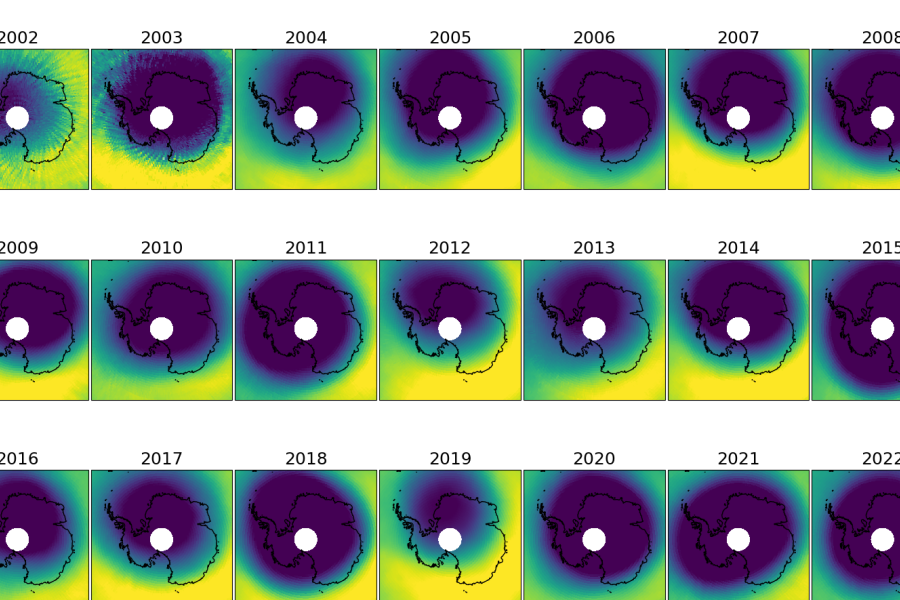
Spatial and temporal ozone distribution of the total ozone columns. Retrieval of the data and analysis.
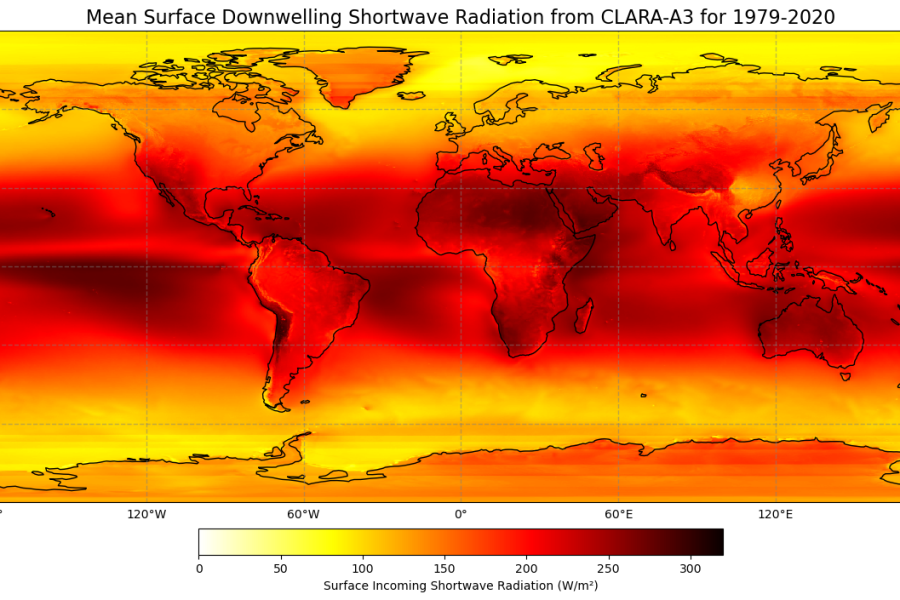
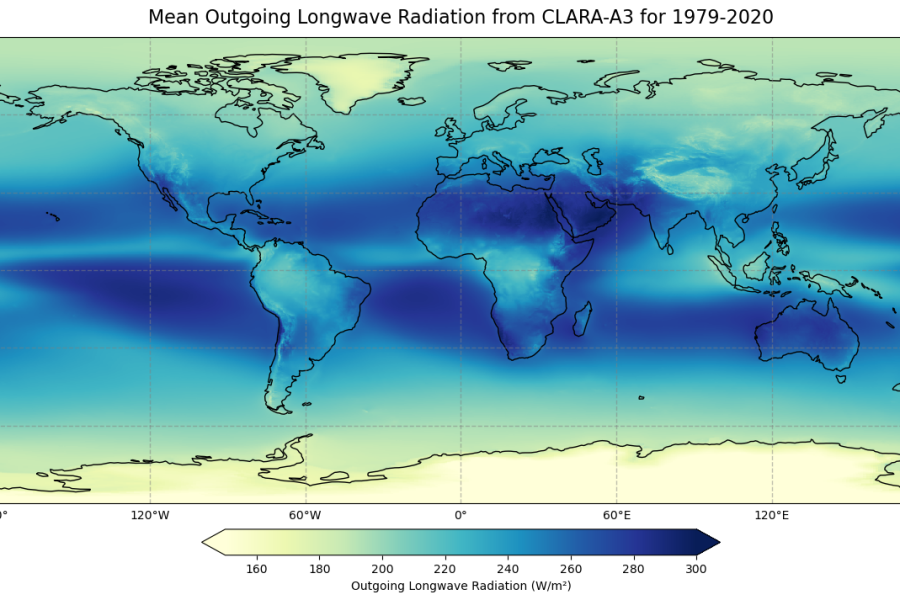
Cloud and radiation parameters of EUMETSAT's CM SAF CLARA-A3 dataset. Connection between clouds and radiation.
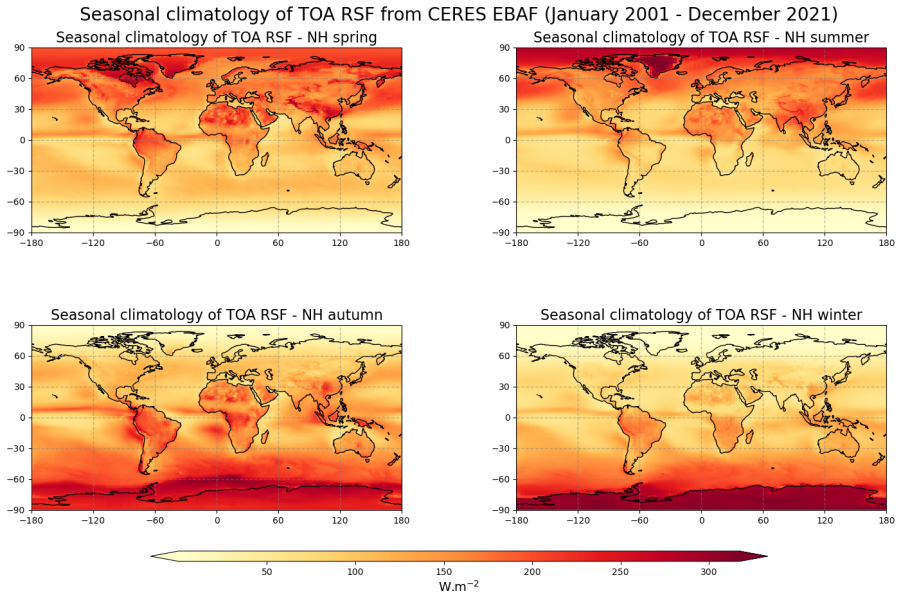
Using Cloud and Earth's Radiant Energy System Energy Balanced and Filled Earth's Radiation Budget data for climate studies
Earth radiation (top of atmosphere) parameters of EUMETSAT's CM SAF CLARA-A3. Access, process and visualize the data.
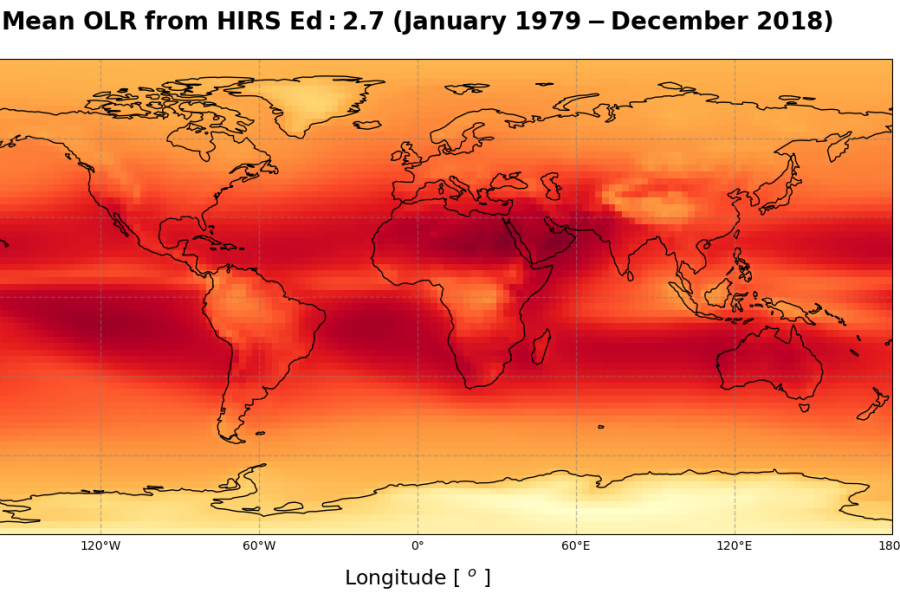
Introduction to the ECV Earth Radiation Budget, Outgoing Longwave Radiation (OLR) and three use cases
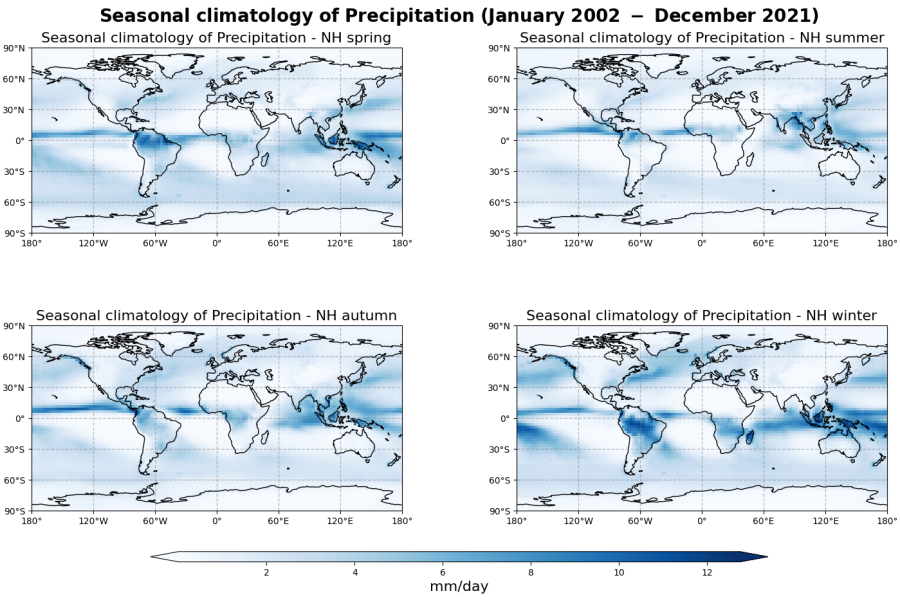
Using GIRAFE data record for climate studies. Two use cases: analysis of time averaged and seasonal data; trend analysis
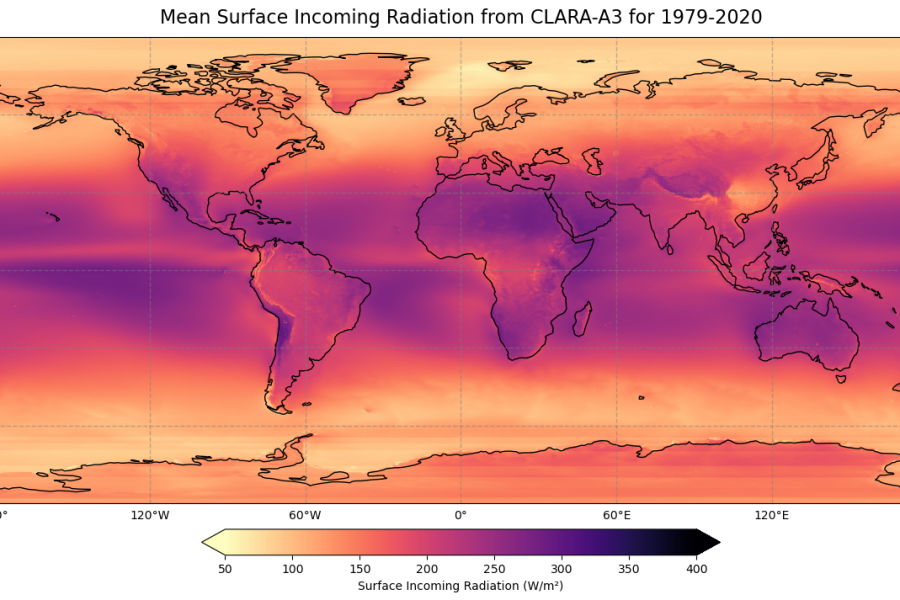
ECV Surface Radiation Budget. Scratch, access and step-by-step guide on how to process and visualize the data