

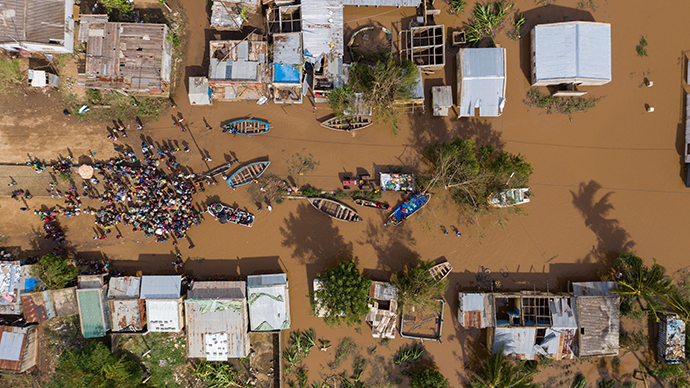
© Bruno Pedro/Wirestock Creators/Adobe Stock
ECMWF has joined the Risk-informed Early Action Partnership (REAP), a global initiative that aims to strengthen early warning systems and improve anticipatory action in the face of climate- and weather-related hazards.
Launched in 2019 at the UN Climate Action Summit, REAP brings together over 100 partners from across the climate, development, humanitarian and hydrometeorological communities. The partnership works to improve coordination and accelerate action so that communities can prepare for and respond to disasters before they escalate.
By becoming a partner, ECMWF joins a global network focused on strengthening the full early warning and early action value chain, from forecasting and risk information to preparedness, financing and response.
Stijn Vermoote, Head of Partnerships and Engagement at ECMWF, said: “Joining REAP brings together ECMWF’s expertise with REAP’s action-focused network to strengthen early warning systems and early action financing, helping communities act sooner, reduce risk and save lives.
"It also reflects the importance of a systemic shift towards anticipatory, evidence-based action, aligning policy, finance and partnerships to better protect lives and livelihoods from climate- and weather-related impacts.”
ECMWF already plays a key role in several European Union (EU)-funded initiatives, including the Copernicus Climate Change Service, the Copernicus Atmosphere Monitoring Service, and the Destination Earth initiative.
This also includes Strengthening Early Warning in Africa (SEWA), an action under the Africa–EU Space Partnership Programme, supported by the EU’s Global Gateway strategy. SEWA helps enhance early warning capabilities for hazardous weather- and climate-related events in Sub-Saharan Africa.
Through its involvement in REAP, ECMWF will explore opportunities to strengthen the use of advanced forecasting capabilities, including machine learning-based approaches and supporting improved access to open meteorological and climate data.
The Centre will also extend its engagement with the Early Warnings for All (EW4All) initiative, including through national and regional early warning capabilities in collaboration with the World Meteorological Organization (WMO).