
Datasets
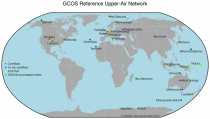
Interval/period: Sun, 01/01/1978 - Wed, 10/17/2018
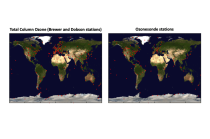
The total ozone estimates are based on solar UV radiation measurements made by ground-based spectrophotometers (Dobson or Brewer type spectrophotometers).
The vertical profiles of ozone concentration are estimated primarily using ozonesonde observations.
Data are available for 159 Dobson stations, 109 Brewer stations and 135 ozonesondes stations.
Interval/period: Tue, 01/01/1924 - Sat, 05/09/2026
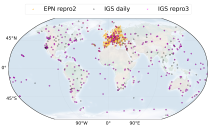
(GNSS) radio signals.
The initial data is collected from two in situ ground-based network of GNSS receivers – the International GNSS Service
(IGS) and EUREF Permanent Network (EPN). The IGS collects, archives, and freely distributes GNSS data from a
cooperatively operated global network of more than 500 ground-based GNSS stations since 1994. The EPN is a European
Interval/period: Mon, 01/01/1996 - Sat, 05/09/2026
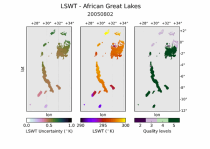
Interval/period: Thu, 06/01/1995 - Sat, 05/09/2026
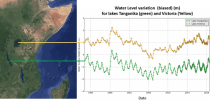
Interval/period: Wed, 01/01/1992 - Sat, 05/09/2026
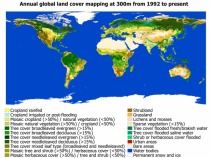
Interval/period: Wed, 01/01/1992 - Sat, 01/01/2022
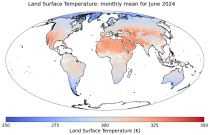
Interval/period: Thu, 06/01/1995 - Tue, 12/31/2024
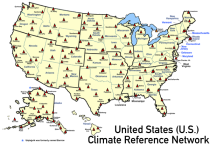
United States Climate Reference Network (USCRN) stations.
There are over 130 USCRN stations over the conterminous United States (U.S.), Alaska, and Hawaii.
The USCRN stations are managed and maintained by the U.S. National Oceanic and Atmospheric Administration (NOAA).
The USCRN observations include air temperature, humidity, wind speed, precipitation, solar radiation,
Interval/period: Sun, 01/01/2006 - Sat, 05/09/2026
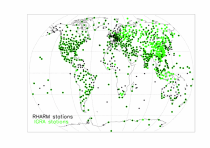
The first is version 2 of the Integrated Global Radiosounding Archive (IGRA) from 1978 which incorporates global
radiosounding profiles of temperature, humidity and wind from a large number of data sources,
which is 30% larger than the previous version 1. IGRA v2 is the result of quality assurance procedures applied to the
Interval/period: Sun, 01/01/1978 - Sat, 05/09/2026
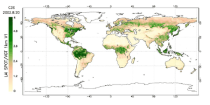
Interval/period: Tue, 09/01/1981 - Sun, 12/01/2024
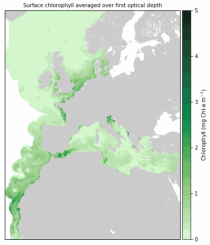
Interval/period: Mon, 01/01/1979 - Mon, 12/31/2018
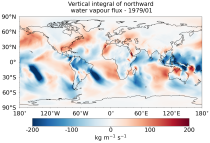
The vertically integrated budget diagnostics include the tendencies and lateral fluxes of total energy, water vapour, and latent heat (with the latent heat of vaporization varying with temperature). In addition, the divergences of the lateral fluxes are provided.
Interval/period: Mon, 01/01/1979 - Sat, 05/09/2026
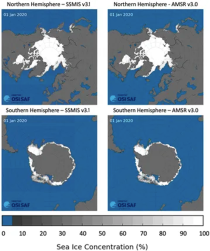
Interval/period: Sun, 10/01/1978 - Mon, 09/29/2025
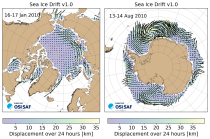
Interval/period: Tue, 01/01/1991 - Thu, 12/31/2020
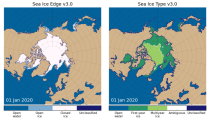
Interval/period: Wed, 10/25/1978 - Wed, 09/24/2025
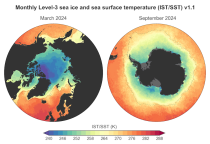
Interval/period: Mon, 01/01/1979 - Tue, 09/30/2025
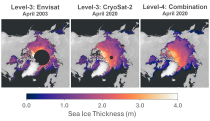
Interval/period: Tue, 10/01/2002 - Sat, 04/12/2025
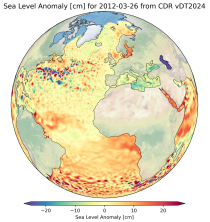
Interval/period: Fri, 01/01/1993 - Sun, 12/31/2023
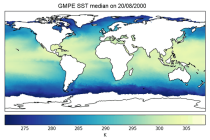
Interval/period: Tue, 09/01/1981 - Sat, 12/31/2016
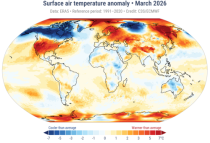
Interval/period: Mon, 01/01/1979 - Wed, 04/01/2026
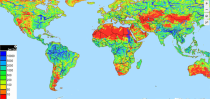
The data are bias adjusted using the Distribution Based Scaling (DBS) method versus the global reference dataset HydroGFD2.0, both bias adjustment method and global reference dataset developed by the Swedish Meteorological and Hydrological Institute (SMHI).
The DBS method is a parametric quantile-mapping variant.
Interval/period: Thu, 10/12/2000 - Thu, 10/18/2018
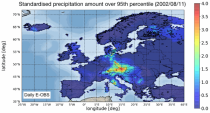
Interval/period: Sun, 01/01/1950 - Tue, 12/31/2019
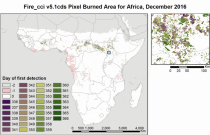
Interval/period: Mon, 01/01/2001 - Fri, 04/01/2022
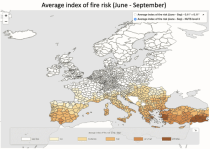
Interval/period: N/A
Interval/period: Wed, 01/03/1940 - Tue, 05/05/2026