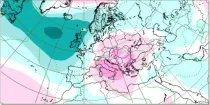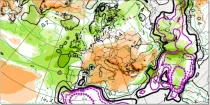
This product shows ENS meteograms from next model version of IFS cycle 50R1 that is planned to be ...

calendar_today Interval/period: N/A

open_in_newview in Open Charts

This chart shows 7-day mean anomalies of temperature at 10hPa from the ECMWF Sub-seasonal range ...

calendar_today Interval/period: N/A

open_in_newview in Open Charts

This chart shows probabilities for the 7-day mean anomalies of 2 m air temperature to be in ...

calendar_today Interval/period: N/A

open_in_newview in Open Charts

This chart shows probabilities that 7-day mean 2 m air temperatures (from the 101 forecast ...

calendar_today Interval/period: N/A

open_in_newview in Open Charts

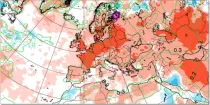
This chart shows 7-day mean anomalies of 2m air temperature from the ECMWF Sub-seasonal range ...

calendar_today Interval/period: N/A

open_in_newview in Open Charts

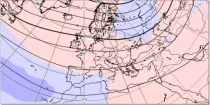
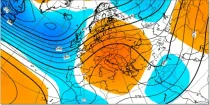
This chart shows 7-day mean anomalies of 500hPa geopotential height from the ECMWF Sub-seasonal ...

calendar_today Interval/period: N/A

open_in_newview in Open Charts
The Global Climate Observing System (GCOS) Reference Upper-Air Network (GRUAN) is an international reference observing network, established in 2006, of sites measuring essential climate variables above Earth's surface, designed to fill an important gap in the current global observing system. GRUAN measurements are providing high-quality climate data records from the surface, through the troposphere, and into the stratosphere.

calendar_today Interval/period: Sun, 01/01/1978 - Wed, 10/17/2018

This dataset provides access to two types of ozone observations: total column ozone estimates and vertical profiles of ozone concentration.
The total ozone estimates are based on solar UV radiation measurements made by ground-based spectrophotometers (Dobson or Brewer type spectrophotometers).
The vertical profiles of ozone concentration are estimated primarily using ozonesonde observations.
Data are available for 159 Dobson stations, 109 Brewer stations and 135 ozonesondes stations.

calendar_today Interval/period: Tue, 01/01/1924 - Mon, 05/11/2026

This dataset provides estimates of water vapour derived from atmospheric delays in Global Navigation Satellite System
(GNSS) radio signals.
The initial data is collected from two in situ ground-based network of GNSS receivers – the International GNSS Service
(IGS) and EUREF Permanent Network (EPN). The IGS collects, archives, and freely distributes GNSS data from a
cooperatively operated global network of more than 500 ground-based GNSS stations since 1994. The EPN is a European

calendar_today Interval/period: Mon, 01/01/1996 - Mon, 05/11/2026

This dataset provides daily mid-morning measurements for Lake Surface Water Temperature (LSWT) derived from satellite observations. LSWT, together with five other variables (lake ice cover and thickness, water leaving reflectance, water level and extent) is recognised as the Essential Climate Variable (ECV) "Lakes" by the Global Climate Observing System (GCOS). LSWT is a key parameter in determining lake ecological conditions as it influences physical, chemical and biological processes.

calendar_today Interval/period: Thu, 06/01/1995 - Mon, 05/11/2026

This dataset provides lake water levels for 311 selected lakes on four continents derived from satellite radar altimetry.

calendar_today Interval/period: Wed, 01/01/1992 - Mon, 05/11/2026

This dataset provides global maps describing the land surface into 22 classes, which have been defined using the United Nations Food and Agriculture Organization’s (UN FAO) Land Cover Classification System (LCCS). In addition to the land cover (LC) maps, four quality flags are produced to document the reliability of the classification and change detection.

calendar_today Interval/period: Wed, 01/01/1992 - Sat, 01/01/2022

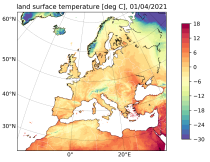
This dataset contains monthly daytime and nighttime clear-sky land surface temperatures (LSTs) and their uncertainty estimates from multiple Infra-Red (IR) instruments on polar orbiting satellites. Daytime and nighttime temperatures correspond to 10:00 and 22:00 local solar time (local solar time is defined as the time in a 24 hour day with 12 noon occurring when the sun is at its highest point at that longitude).

calendar_today Interval/period: Thu, 06/01/1995 - Tue, 12/31/2024

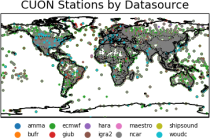
This catalogue entry provides access to a continuous series of near-surface climate observations collected in-situ at
United States Climate Reference Network (USCRN) stations.
There are over 130 USCRN stations over the conterminous United States (U.S.), Alaska, and Hawaii.
The USCRN stations are managed and maintained by the U.S. National Oceanic and Atmospheric Administration (NOAA).
The USCRN observations include air temperature, humidity, wind speed, precipitation, solar radiation,

calendar_today Interval/period: Sun, 01/01/2006 - Mon, 05/11/2026

This catalogue entry provides access to vertical profiles of standard meteorological variables. It includes two archives.
The first is version 2 of the Integrated Global Radiosounding Archive (IGRA) from 1978 which incorporates global
radiosounding profiles of temperature, humidity and wind from a large number of data sources,
which is 30% larger than the previous version 1. IGRA v2 is the result of quality assurance procedures applied to the

calendar_today Interval/period: Sun, 01/01/1978 - Mon, 05/11/2026

The following fields are weekly means computed from data of the daily individual forecast runs (section VI-v) and averaged over all ensemble members. The fields are provided in GRIB code.

calendar_today Interval/period: N/A

The following fields are weekly means computed from data of the daily individual forecast runs (section VI-v) and averaged over all ensemble members. The fields are provided in GRIB code.

calendar_today Interval/period: N/A

The following products correspond to the products in section VI-i with the model climate mean subtracted. The model climate is derived from hindcast statistics. The fields are provided in GRIB code.

calendar_today Interval/period: N/A

The following fields are weekly means computed from data of the daily individual forecast runs (section VI-v) for the individual ensemble members. The fields are provided in GRIB code.

calendar_today Interval/period: N/A

The following fields are weekly means computed from data of the daily individual forecast runs (section VI-v) for the individual ensemble members. The fields are provided in GRIB code.

calendar_today Interval/period: N/A

The following products correspond to the products in section VI-iii with the model climate mean subtracted. The model climate is derived from hindcast statistics. The fields are provided in GRIB code.

calendar_today Interval/period: N/A

The following products correspond to the products in section VI-iii with the model climate mean subtracted. The model climate is derived from hindcast statistics. The fields are provided in GRIB code.

calendar_today Interval/period: N/A

The products contain values for each ensemble member of the Monthly Prediction System plus the equivalent hindcast products. The fields are provided in GRIB code.

calendar_today Interval/period: N/A

The products contain values for each ensemble member of the Monthly Prediction System plus the equivalent hindcast products. The fields are provided in GRIB code.

calendar_today Interval/period: N/A