
Datasets
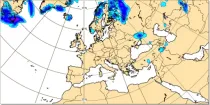
This chart shows the probability that the temperature at 2 m above the earth’s surface is below 0°C and the total of convective and broad scale precipitation ...
Interval/period: N/A
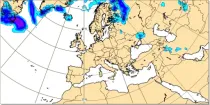
This chart shows the probability that both the wind at 10 m above the earth's surface is ...
Interval/period: N/A
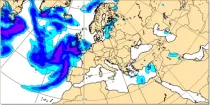
This chart shows the probability that both the wind at 10 m above the earth's surface is ...
Interval/period: N/A
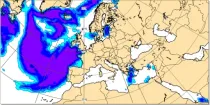
This chart shows the probability that both the wind at 10 m above the earth's surface is ...
Interval/period: N/A
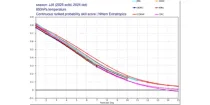
These diagrams compare Continuous Ranked Probability Skill Scores (CRPSS) of ECMWF with ...
Interval/period: N/A

Control 48R1 experiment run at Tco199 for 46 days over 20 years starting on 12, 16 , 19, 23, 26 , 30 December and 2nd, 6th and 9th January 1999-2018.
Examples
retrieve, class=rd, stream=enfh, expver=igis, type=pf, number=1/to/4, levtype=sfc, param=2t, date=20191212, hdate=20091212, time=00:00:00, step=24, target='output.grib'Retrieving 2-meter temperature of the hindcast starting on 12 December 2019 for all perturbed members.
Interval/period: N/A
control (all usual observation types assimilated) for Observing System Experiment (OSE) looking at ARs affecting western USA DeHaan et al (2023, WAF, submitted). Experiment from 2020-01-20 to 2020-04-28 (no dropsonde experiment is hd6r).
Examples
retrieve, anoffset=9, class=rd, date=2020-01-20, expver=hd8r, levtype=sfc, step=0/12/24/48, param=137.128, stream=lwda, time=00:00:00, type=fc, target="output.grib"Forecast fields of integrated water vapour, step gives forecast range in hours
Interval/period: N/A
This is a 4 month seasonal hindcast experiment with CY49R1 at TCo199 initialised form an open loop land-surface analysis.
Examples
Interval/period: N/A
Coupled 32-day experiment, 51 member ensemble, Tco319L137. Start dates covering extended winters 2020/2023, starting on 1st Nov up to 24 April, 1 week apart.
Examples
retrieve, class=rd, stream=enfh, expver=idlq, type=pf, number=1, levtype=sfc, param=2t, hdate=20201101, date=20231101, time=00:00:00, step=24, target='output.grib'Interval/period: N/A
Control (i.e. all usual observation types assimilated) for aircraft Observing System Experiment (OSE) see Ingleby et al (2021), https://doi.org/10.1029/2020GL090699 . Experiment from 2019-01-28 to 2019-04-30, also used for 'atmospheric river' tests.
Examples
Interval/period: N/A
Research forecast experiment produced with ECMWF IFS cycle 47R1, at TCo399 (25km), for the EUREC4A field campaign (15.01.2020-14.02.2020). Initialized from the hezu analysis, with fields saved on model levels (bit identical to hezu forecasts)
Examples
Interval/period: N/A
Coupled subsesaonal reforecasts (ENS-C) consisting of 10 perturbed members, each integrated for 46-days, starting on the first of each month between 2006 and 2023 for a total of 216 start dates. The atmospheric model is configured to use the cubic octahedral reduced Gaussian grid with 137 vertical levels and a horizontal resolution of Tco319. The atmosphere is coupled hourly to an eddy-permitting NEMO4-SI3 configuration, which uses 75 vertical levels in the ocean and the eORCA025 grid.
Interval/period: N/A
Standalone ECMWF wave model CY46R1 forced by ERA5 hourly neutral 10m winds, surface air density, gustiness and sea ice fraction from 2010 to 2018. Native grid resolution is 14km, 36 directions, 36 frequencies. No wave data assimilation. Hourly output.
Examples
Interval/period: N/A
Standalone ECMWF wave model CY46R1 forced by ERA5 hourly neutral 10m winds, surface air density, gustiness and sea ice fraction from 2019 to 2020. Native grid resolution is 14km, 36 directions,36 frequencies. No wave data assimilation. Hourly output.
Examples
Interval/period: N/A
Standalone wave model CY47R1 forced by ERA5 hourly neutral 10m winds, air density, gustiness and sea ice fraction (1979-1989). Native grid is Tco639 (18km), 36 directions, 36 frequencies. No wave data assimilation. Hourly output, many parameters.
Examples
Interval/period: N/A
Standalone wave model CY47R1 forced by ERA5 hourly neutral 10m winds, air density, gustiness and sea ice fraction (1999-1999). Native grid is Tco639 (18km), 36 directions, 36 frequencies. No wave data assimilation. Hourly output, many parameters.
Examples
Interval/period: N/A
Standalone wave model CY47R1 forced by ERA5 hourly neutral 10m winds, air density, gustiness and sea ice fraction (2000-2009). Native grid is Tco639 (18km), 36 directions, 36 frequencies. No wave data assimilation. Hourly output, many parameters.
Examples
Interval/period: N/A
Standalone wave model CY47R1 forced by ERA5 hourly neutral 10m winds, air density, gustiness and sea ice fraction (2010-2020). Native grid is Tco639 (18km), 36 directions, 36 frequencies. No wave data assimilation. Hourly output, many parameters.
Examples
Interval/period: N/A
Standalone wave model CY47R3 forced by ERA5 hourly neutral 10m winds, air density, gustiness and sea ice fraction (2015-2021). Native grid is Tco639 (18km), 36 directions, 36 frequencies. No wave data assimilation. Hourly output, many parameters.
Examples
Interval/period: N/A
Standalone ecWAM wave model CY50R1 forced by corrected ERA5 hourly neutral 10m winds, air density, gustiness and sea ice fraction (1980-1989). Native grid is Tco799 (14km), 36 directions, 36 frequencies. See Bidlot et al. 2026: Wave Hindcast for ERA6 Preparation and Training Data Driven Models. ECMWF Tech Memo, in preparation, Hourly output, many parameters.
Interval/period: N/A
Standalone ecWAM wave model CY50R1 forced by corrected ERA5 hourly neutral 10m winds, air density, gustiness and sea ice fraction (1990-1999). Native grid is Tco799 (14km), 36 directions, 36 frequencies. Altimeter wave data assimilation,See Bidlot et al. 2026: Wave Hindcast for ERA6 Preparation and Training Data Driven Models. ECMWF Tech Memo, in preparation, Hourly output, many parameters.
Interval/period: N/A
Standalone ecWAM wave model CY50R1 forced by corrected ERA5 hourly neutral 10m winds, air density, gustiness and sea ice fraction (2000-2018). Native grid is Tco799 (14km), 36 directions, 36 frequencies. Altimeter wave data assimilation,See Bidlot et al. 2026: Wave Hindcast for ERA6 Preparation and Training Data Driven Models. ECMWF Tech Memo, in preparation, Hourly output, many parameters.
Interval/period: N/A
Standalone ecWAM wave model CY50R1 forced by corrected ERA5 hourly neutral 10m winds, air density, gustiness and sea ice fraction (2019-2023). Native grid is Tco799 (14km), 36 directions, 36 frequencies. Altimeter wave data assimilation,See Bidlot et al. 2026: Wave Hindcast for ERA6 Preparation and Training Data Driven Models. ECMWF Tech Memo, in preparation, Hourly output, many parameters.
Interval/period: N/A
Standalone ecWAM wave model CY50R1 forced by corrected ERA5 hourly neutral 10m winds, air density, gustiness and sea ice fraction (2024-2025). Native grid is Tco799 (14km), 36 directions, 36 frequencies. Altimeter wave data assimilation,See Bidlot et al. 2026: Wave Hindcast for ERA6 Preparation and Training Data Driven Models. ECMWF Tech Memo, in preparation, Hourly output, many parameters.
Interval/period: N/A

Note: This Generation 1 Collection has been superseded by Generation 2 Simulation-level Collections
Interval/period: N/A