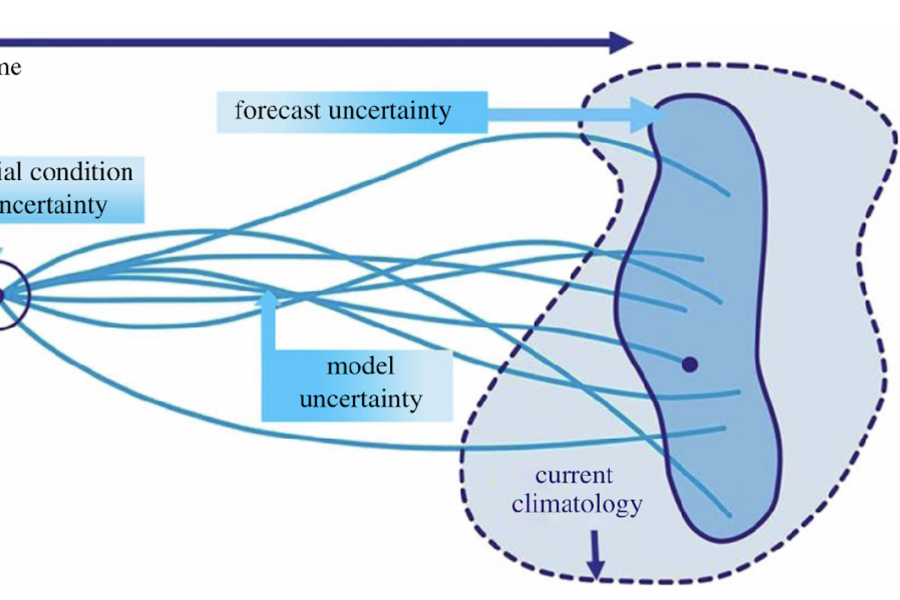
Learn about the main sources of uncertainty in weather forecasting and how they are addressed in early warning systems.
This lesson covers key processes in ice and mixed-phase clouds and precipitation, and parametrization uncertainties.
This lesson will take you through what convection is and the phenomena it causes.
This lesson looks at the three classes of parametrization schemes and the main characteristics of the IFS scheme.
Learn about sources of error in NWP, how they are quantified, and how ensembles are evaluated.
Explore the key microphysical and warm-phase processes of cloud and precipitation parametrisation and their use in NWP.
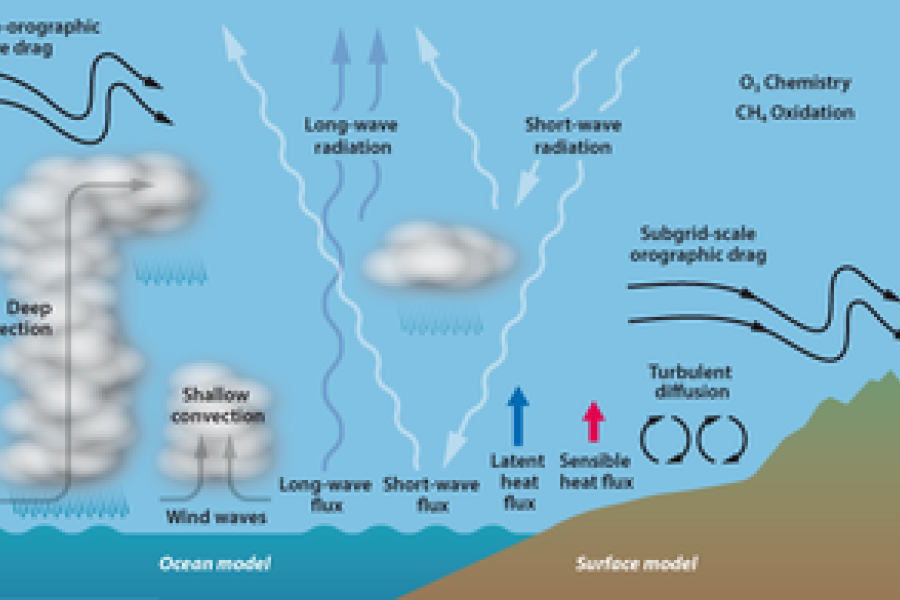
Learn how sub-grid-scale processes (not explicitly simulated in NWP), are parameterised and how challenges are overcome.
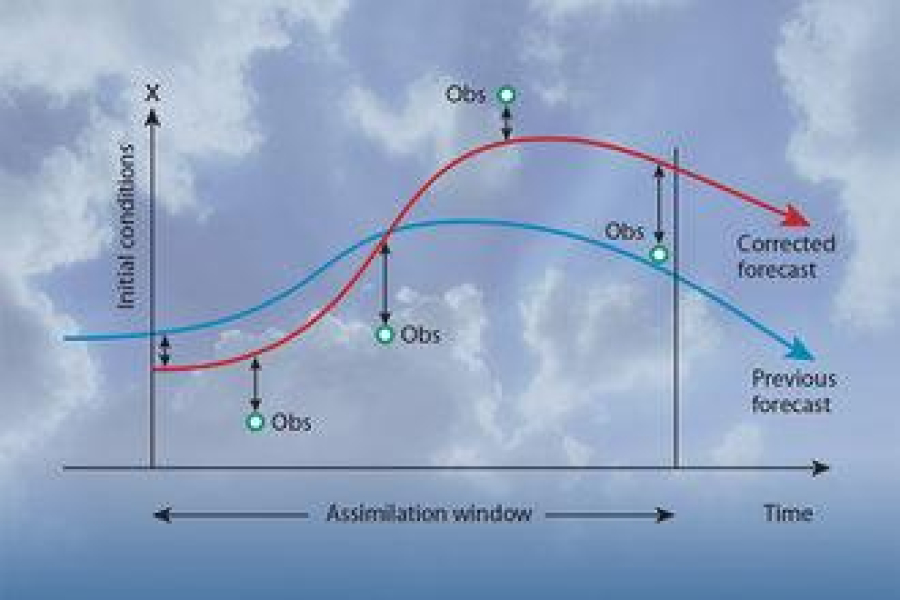
Learn about data assimilation and how it is used to define ‘optimal' initial conditions for NWP at ECMWF.
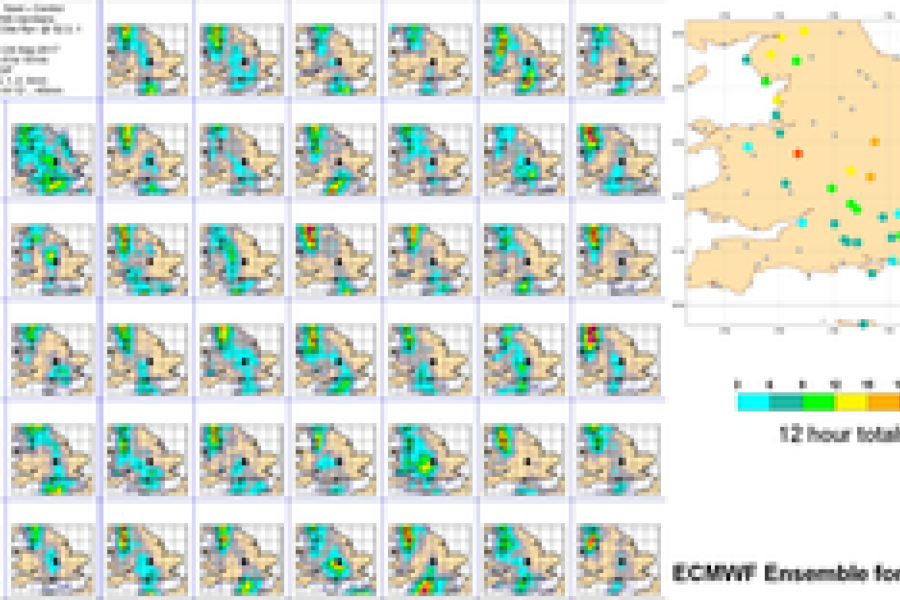
Learn about uncertainties and chaotic behaviour in NWP, why ensembles are needed and how they are used at ECMWF.
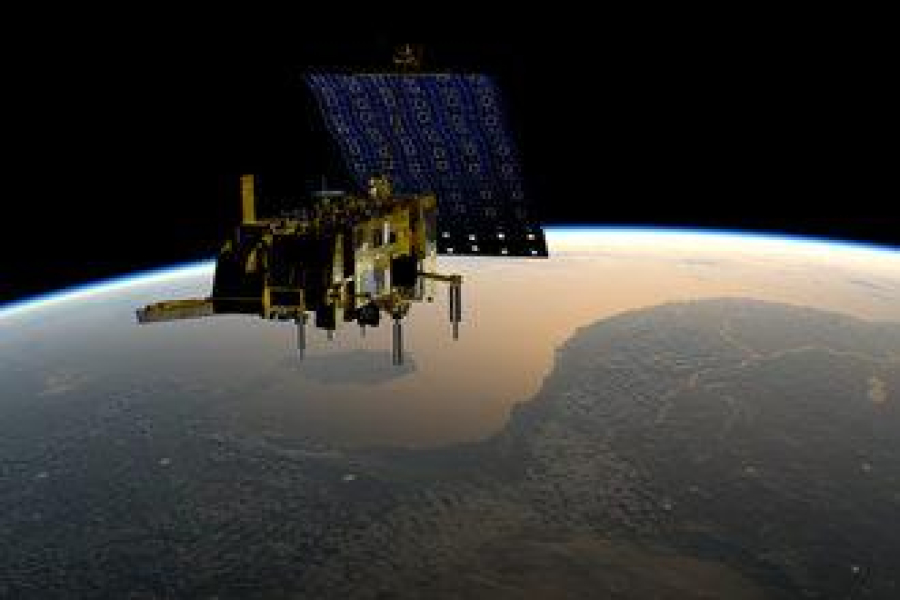
Learn about the role of satellite observations and measurements, and how these are assimilated and monitored for NWP.
Explore sources of uncertainty in NWP and how this is represented in the IFS using stochastic physics.
Learn about the ways in which forecast jumpiness can appear and how it can be mitigated.