
Datasets
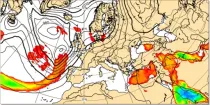
These charts show indices which indicate the susceptibility of the troposphere to support free convection. Typical values of the different indices depend on location and...
Interval/period: N/A
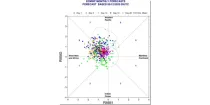
This diagram shows time evolution of a Madden-Julian Oscillation (MJO) index. ...
Interval/period: N/A
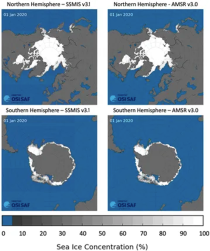
Interval/period: Sun, 10/01/1978 - Mon, 09/29/2025
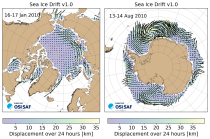
Interval/period: Tue, 01/01/1991 - Thu, 12/31/2020
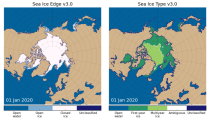
Interval/period: Wed, 10/25/1978 - Wed, 09/24/2025
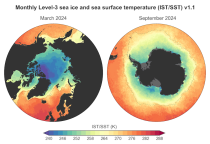
Interval/period: Mon, 01/01/1979 - Tue, 09/30/2025
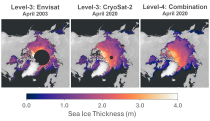
Interval/period: Tue, 10/01/2002 - Sat, 04/12/2025
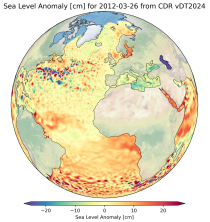
Interval/period: Fri, 01/01/1993 - Sun, 12/31/2023
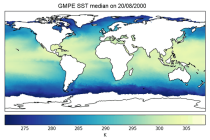
Interval/period: Tue, 09/01/1981 - Sat, 12/31/2016
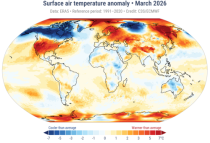
Interval/period: Mon, 01/01/1979 - Wed, 04/01/2026
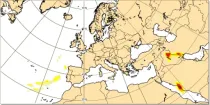
This chart shows probability information regarding lightning flash density derived from the ...
Interval/period: N/A
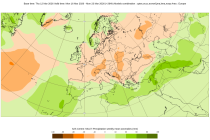
S2S project behind the dataset started in 2013 as a joint initiative of the World Weather Research Programme (WWRP) and the World Climate Research Programme (WCRP).
The goal of S2S project was to improve sub-seasonal forecast skill through combining multiple forecasting systems, enable multi-model evaluations and enhance knowledge sharing between operational centres.
Interval/period: Thu, 01/01/2015 - Wed, 05/06/2026
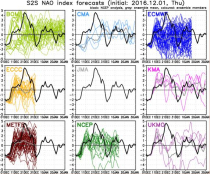
S2S project behind the dataset started in 2013 as a joint initiative of the World Weather Research Programme (WWRP) and the World Climate Research Programme (WCRP).
The goal of S2S project was to improve sub-seasonal forecast skill through combining multiple forecasting systems, enable multi-model evaluations and enhance knowledge sharing between operational centres.
Interval/period: Tue, 03/01/2011 - Tue, 06/09/2026
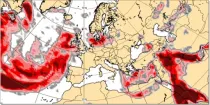
This chart shows probability information regarding CAPE shear derived from the ECMWF ensemble ...
Interval/period: N/A
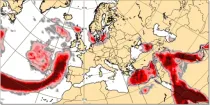
This chart shows probability information regarding MUCAPE derived from the ECMWF ensemble (ENS) ...
Interval/period: N/A
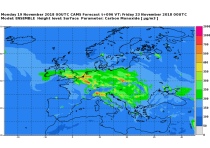
This dataset provides daily air quality analyses and forecasts for Europe.
Interval/period: N/A
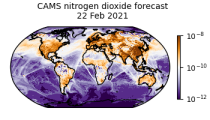
CAMS produces global forecasts for atmospheric composition twice a day. The forecasts consist of more than 50 chemical species (e.g. ozone, nitrogen dioxide, carbon monoxide) and seven different types of aerosol (desert dust, sea salt, organic matter, black carbon, sulphate, nitrate and ammonium aerosol). In addition, several meteorological variables are available as well.
Interval/period: N/A
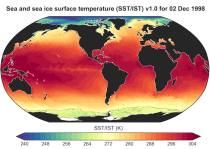
Interval/period: Fri, 01/01/1982 - Tue, 12/31/2024
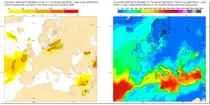
These charts show areas where anomalous CAPE are likely to occur.
Interval/period: N/A
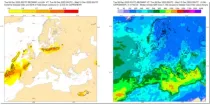
These charts show areas where anomalous CAPE Shear are likely to occur.
Interval/period: N/A
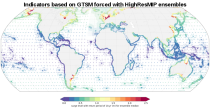
Interval/period: Mon, 01/01/1951 - Sat, 12/31/2050
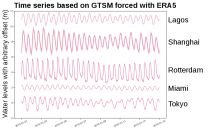
Interval/period: Sun, 01/01/1950 - Sat, 12/31/2050
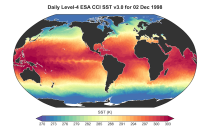
Interval/period: Fri, 07/13/1979 - Tue, 04/21/2026
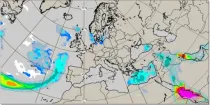
MUCAPE (Most Unstable Convective Available Potential Energy) is an indicator of atmospheric instability (the susceptibility of the troposphere to support free convection) and...
Interval/period: N/A
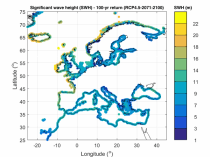
Interval/period: Thu, 01/01/1976 - Fri, 12/31/2100